

Tenerife is one of the best places in the world to see angelsharks while diving. These rare and critically endangered sharks have found a safe haven in the Canary Islands, making Tenerife a dream destination for divers looking for a truly unique encounter.
In this guide, we’ll explain what angelsharks are, when and where to see them in Tenerife, and how to dive responsibly to protect this incredible species.
Table of Contents
What is an Angel shark?
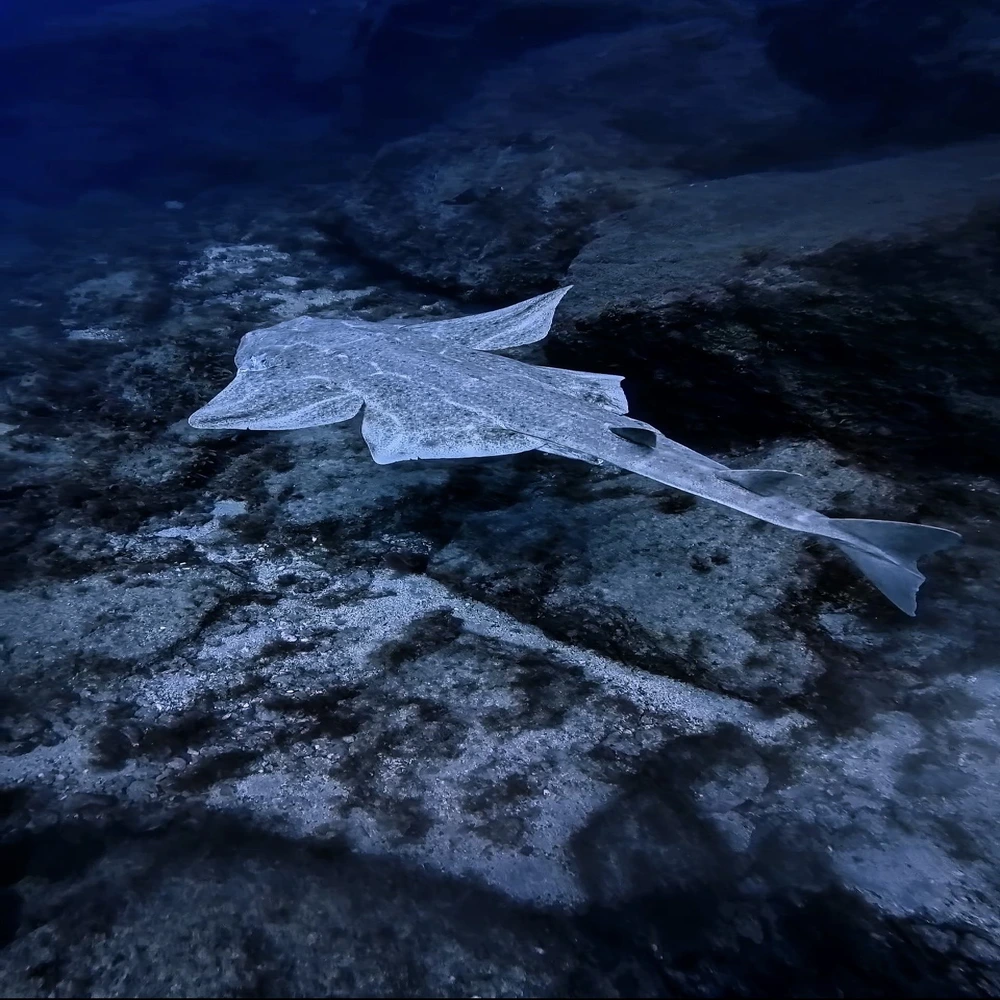
The angel shark (Squatina squatina) looks like a mix between a shark and a ray. It has a flat body, wide pectoral fins, and uses camouflage to hide in the sand while waiting for prey.
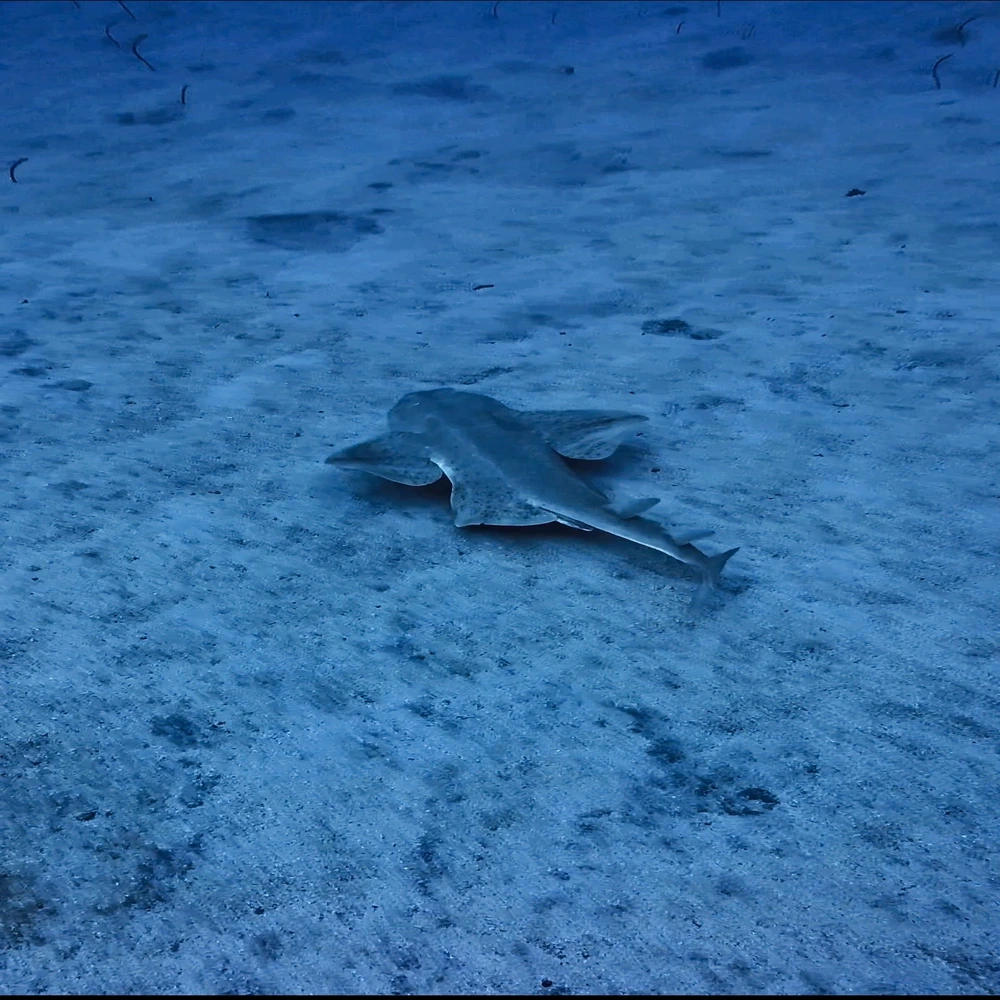
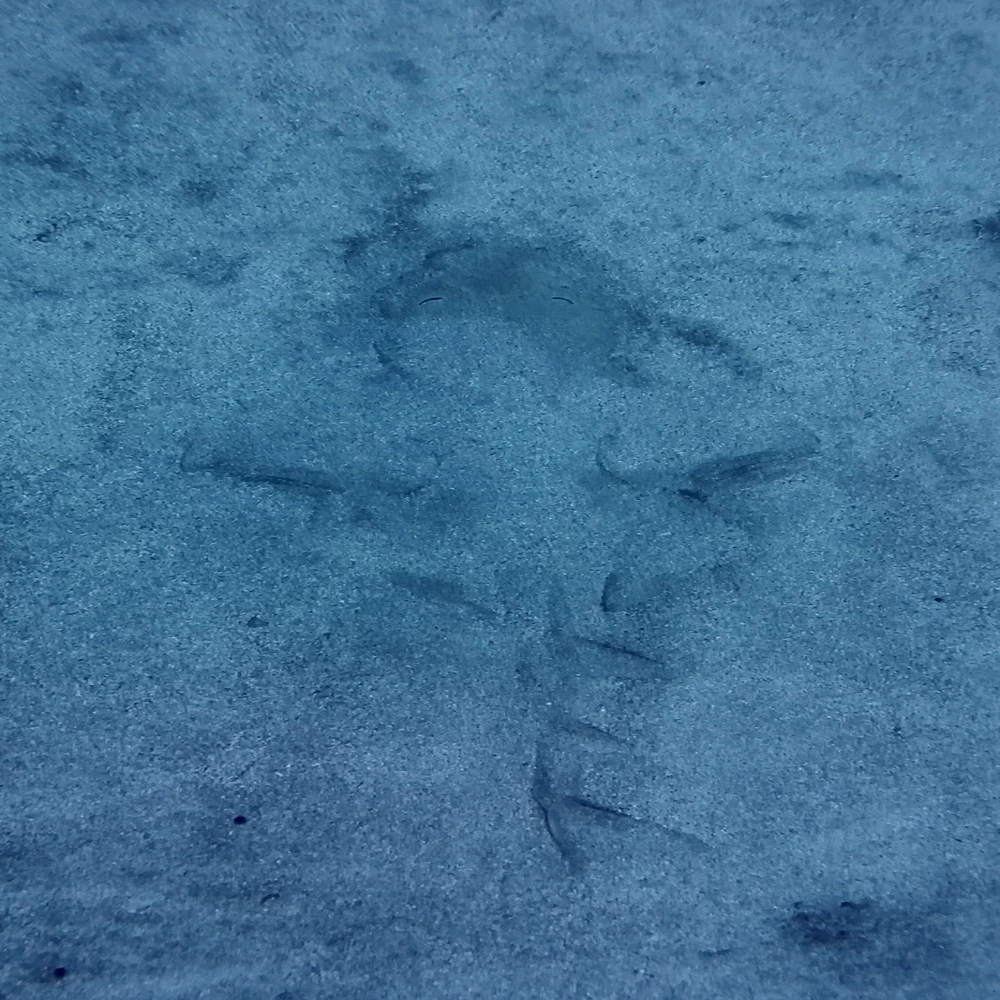
Angel sharks are ambush predators. They spend most of their time partially buried in sandy bottoms, relying on perfect camouflage rather than speed. When prey approaches, they strike extremely fast.
Angelsharks were once common across the Mediterranean and Atlantic coasts of Europe, but today they are critically endangered due to overfishing, trawling, and habitat destruction. Tenerife and the Canary Islands are now considered one of the last strongholds for this species.
Seeing an angelshark in the wild is considered a rare and privileged experience for divers.
Why Tenerife Is So Special for Angel sharks
Tenerife offers the perfect conditions for angelsharks:
- Sandy seabeds mixed with volcanic rock.
- Stable water temperatures year‑round.
- Protected marine areas.
- Strong local awareness and conservation efforts
Unlike many other places in the world, angel sharks in Tenerife are resident, meaning sightings are frequent during the right season.
When is Angelshark Season in Tenerife?
Angelsharks can be seen throughout the year, but sightings are much more common during specific months due to seasonal behavior.
Best season:
- October to May
During these months, angelsharks move into shallower waters for mating and resting, often between 10 and 25 meters, making them accessible to recreational divers.
Less common season:
- June to September
In summer, angelsharks tend to move deeper and sightings become less frequent, though they are still possible with experienced local guides.
Water temperature during peak season ranges from 18–21°C, so a 5–7 mm wetsuit is recommended for comfort.
Best Dive Sites for Angelsharks in South Tenerife
To find an Angelshark, you need a “Barbarian eye.” We focus on sandy plains adjacent to volcanic reefs. Our top spots include:
Abades:
A marine protected area with frequent sightings. Is a sheltered shore dive on Tenerife’s southeast coast, ideal for training dives and relaxed fun dives. Entry is easy from the beach, with gentle conditions, sandy bottoms mixed with volcanic rock, and depths gradually increasing to around 18–20 m. Divers commonly spot rays, cuttlefish, octopus, barracudas, and schools of reef fish, making Abades a reliable and beginner-friendly dive site with great conditions year-round.
Palm-mar wall:
The Palm Mar Wall is a spectacular boat dive on Tenerife’s south coast, famous for its dramatic vertical drop-offs and volcanic rock formations. The wall starts shallow and descends well beyond recreational limits, offering excellent visibility and rich marine life. Divers often see turtles, rays, moray eels, large groupers, and schools of pelagic fish, making Palm Mar Wall a favorite site for experienced divers looking for depth, scenery, and big-life encounters.
Playa de las Vistas:
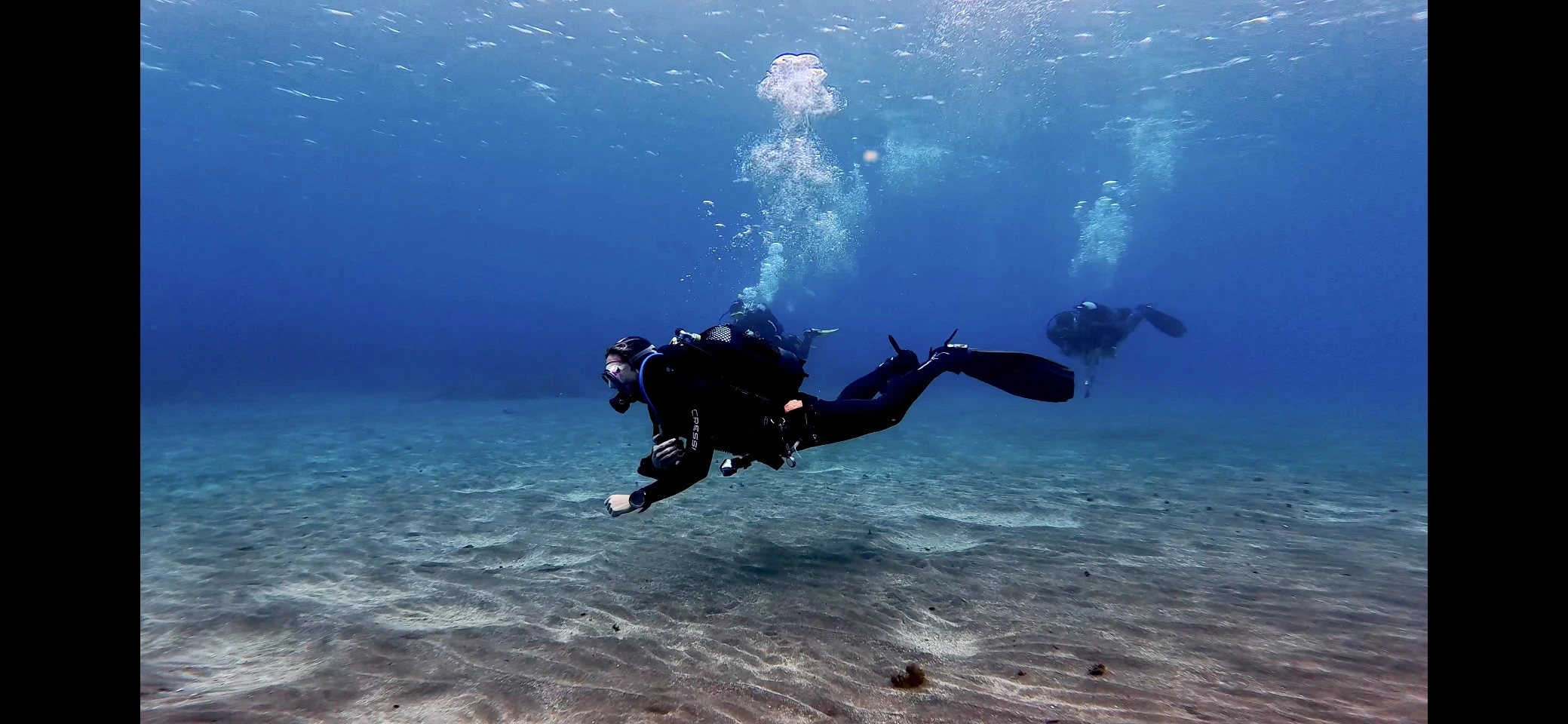
Located in Los Cristianos, Las Vistas is a shallow sandy dive site well known for its calm conditions and easy access. The seabed is mostly fine sand with gentle slopes, creating an ideal habitat for angelsharks, rays, and other bottom-dwelling species.
During angelshark season (October to May), divers often spot angelsharks partially buried in the sand, resting naturally and relying on their excellent camouflage. The site usually offers good visibility and minimal current, making it suitable for relaxed dives, buoyancy training, and underwater photography.
Las Vistas is especially popular for SSI courses, refresh dives, and guided fun dives, as it allows divers to focus on technique while observing marine life in a stress-free environment.
How to Dive Responsibly: The Barbarian Code
Because the Angel shark is Critically Endangered, we follow a strict code of conduct to ensure their survival:
- No Touching/Chasing: Observe from at least 2-3 meters away.
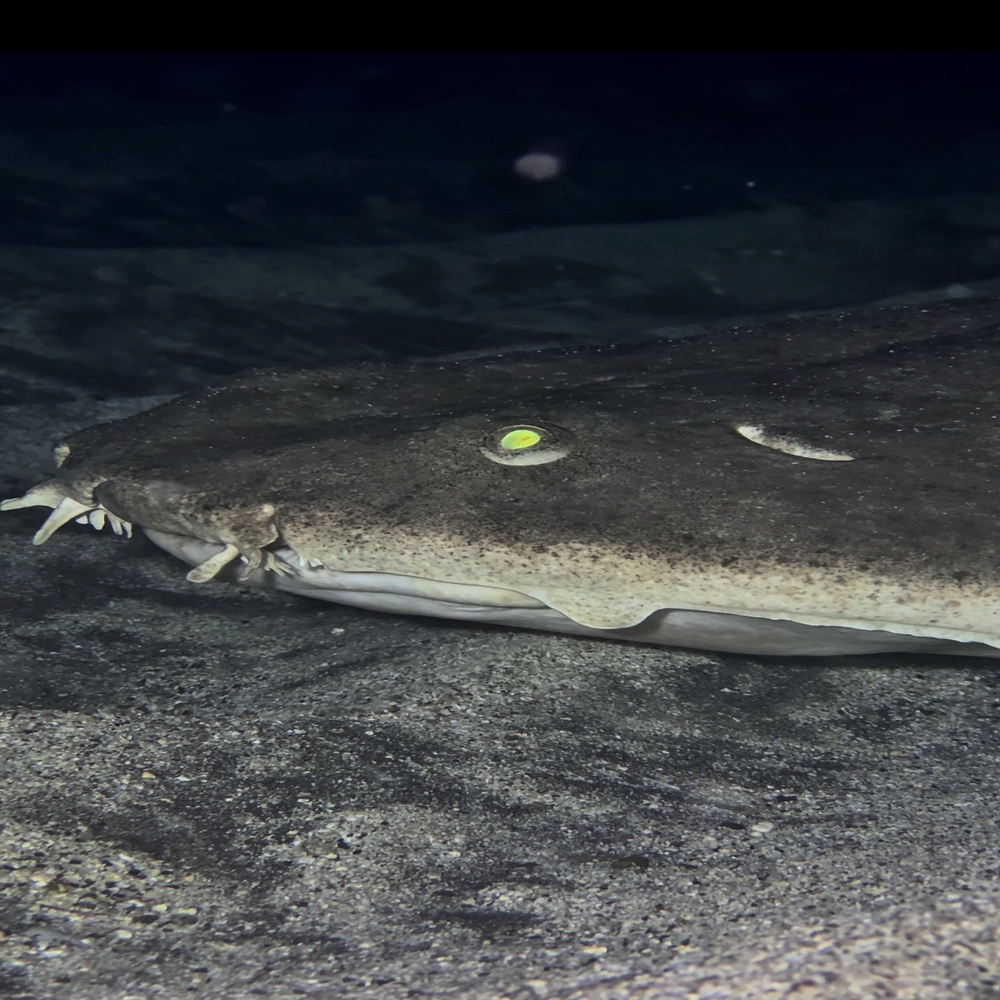
- Perfect Buoyancy: Avoid kicking up sand, which can disturb a buried shark.
- Flash Photography: Keep flash to a minimum; never point a strobe directly into the shark’s eyes.
A calm, respectful approach ensures both diver safety and animal protection.
Are Angel sharks Dangerous?
Angelsharks are not aggressive and do not see divers as prey. They are calm animals that rely on camouflage rather than confrontation.
However, like any wild animal, they may react defensively if:
- Stepped on accidentally
- Chased or cornered
- Blinded repeatedly with flash photography
This is why good buoyancy control and awareness are essential. When treated with respect, angel shark encounters are peaceful, safe, and unforgettable.
Diving with Local Experts
Finding angel sharks is not only about luck—it’s about local knowledge and experience.
Professional local dive centers understand:
- Seasonal movements of angelsharks
- Which sandy areas they prefer
- How weather and swell affect sightings
- How to approach without causing stress
At Barbarian Diving Tenerife, we dive in small groups, choose sites based on daily conditions, and follow strict conservation guidelines to protect angel sharks and their habitat.
Angel shark Conservation in Tenerife
Angelsharks are listed as Critically Endangered by the IUCN. The Canary Islands play a vital role in the survival of this species thanks to strong local protections, increased marine awareness, and the work of conservation initiatives such as the Angel Shark Project (https://angelsharkproject.com).
In Tenerife, angelsharks are protected by law, meaning that:
- It is illegal to touch, disturb, or harass angelsharks
- Divers must keep a safe and respectful distance
- Responsible tourism helps fund conservation and scientific research supported by projects like the Angel Shark Project
By diving responsibly and choosing ethical dive centers that follow these guidelines and collaborate with conservation programs, divers actively contribute to the protection of angelsharks and the long-term preservation of their habitat in the Canary Islands.
Why Choose Barbarian Diving for Shark Encounters?
We don’t do “cattle boat” diving. We believe in the Tribe mentality:
- Small Groups: Maximum 4 divers per guide for shark dives.
- Expert Knowledge: Our instructors know the specific “beds” where sharks prefer to rest.
- Conservation First: We report sightings to conservation databases to help protect the species.
Frequently Asked Questions About Angel shark Diving in Tenerife
Can beginners see angel sharks in Tenerife?
Yes. During angelshark season (October to May), sightings often occur between 5 and 20 meters, making them accessible to Open Water divers when conditions are suitable and under professional supervision.
How deep are angel shark dives?
Most angel shark encounters happen between 4 and 25 meters. Dive profiles depend on the site, conditions, and diver experience. Angel shark dives are suitable for certified divers, and many visitors combine them with SSI diving courses in Tenerife, improve skills and buoyancy control.
Is angel shark diving safe?
Yes. Angelsharks are calm and non‑aggressive when respected. With good buoyancy control and guidance from a local dive professional, encounters are safe and relaxed.
Can I take photos of angel sharks?
Yes, photography is allowed, but flash use should be minimal and never close to the animal. A calm approach ensures natural behavior and better photos.
Angelshark diving in Tenerife is one of the most unique and meaningful scuba experiences in Europe. Encountering this rare shark in its natural environment is unforgettable and highlights the importance of marine conservation.
If you want to experience angel shark diving with local experts who prioritize safety and conservation, Tenerife is the place—and diving responsibly makes all the difference



0 Comments