

Discover the rich marine biodiversity of the Canary Islands. From parrotfish to angel sharks, find out what species you’ll encounter when scuba diving in Tenerife with Barbarian Diving.
Table of Contents
Canary Islands, a hotspot of marine biodiversity in the Atlantic
When you dive into the waters of the Canary Islands, you are not only diving between volcanic formations and clear waters, you are also entering one of the most biodiverse marine areas in the Atlantic. It’s not only a paradise above the water, under the surface it hides an authentic biological treasure.
The Canary Islands are strategically located off the coast of Western Sahara and its waters are heavily influenced by the cold-water currents of the Atlantic Ocean and the trade winds coming from the northeast. This means that the water reaching the islands is loaded with nutrients and carries marine species from many different places: northern Europe, the Mediterranean,Africa and even America.
This unique mix of cold-water currents and trade winds produces a limited isolation of the archipelago’s characteristic fauna from that found along the mainland coasts. This creates a very diverse ecosystem, being the Canary Islands a meeting point for marine life. For this reason, and thanks to these environmental factors, the Canary Islands have a great variety of fish, algae and other marine animals. The Canary Islands are considered a hotspot of marine biodiversity, and this can be seen from the first dive.
Let’s dive into the fascinating marine species you’re most likely to encounter when you book your Tenerife diving experience with Barbarian Diving.
Marine Species You’ll Encounter When Diving in Tenerife
Bony fish
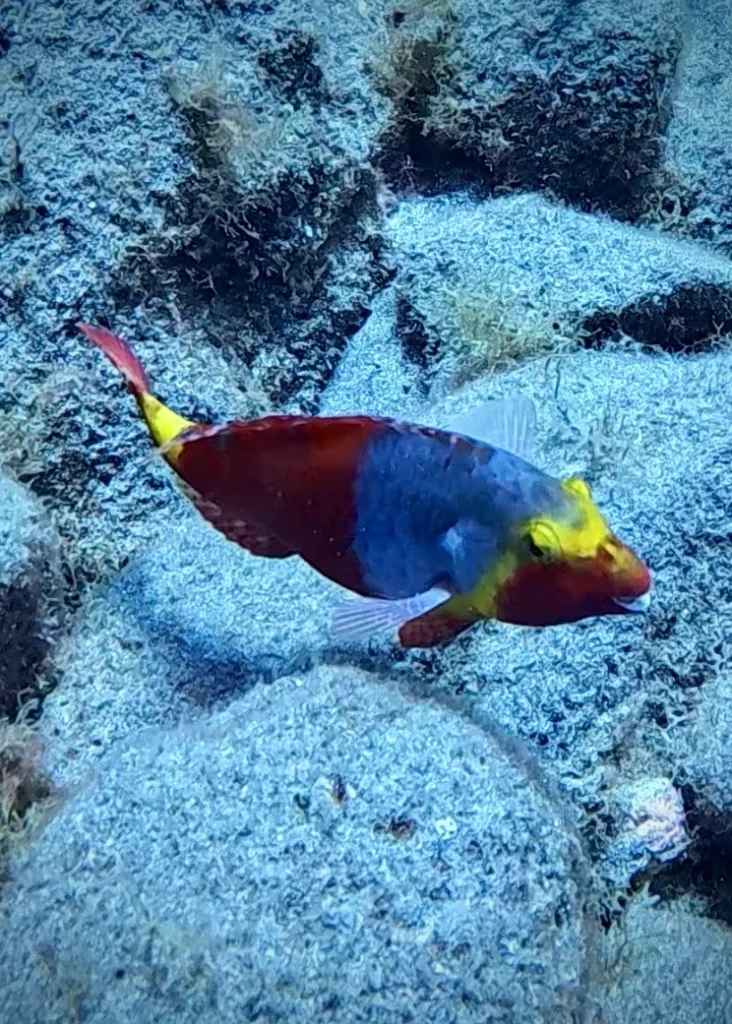
▪ Parrotfish (Sparisoma cretense): it is an emblematic species that we can see in rocky bottoms with vegetation. Its colorfull, calm behaviour and abundance make it a regular on our dives. The typical name it receives in the Canary Islands is “vieja” and it is recognized by its bright color (red, gray and yellow) and its beak-shaped mouth to scrape algae from
the rocks.
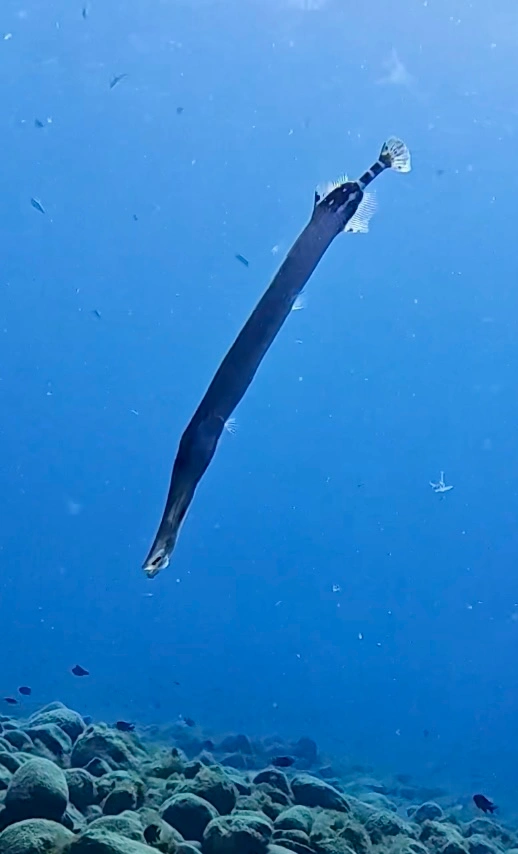
▪ Trumpet fish (Aulostomus strigosus): this is a tropical species, usually individuals are solitary and they look like a sword. Their body is elongated and their mouth is tube-shaped, which lets them feed on smaller fish by suction. To camouflage from predators, they usually place themselves vertically upside down.
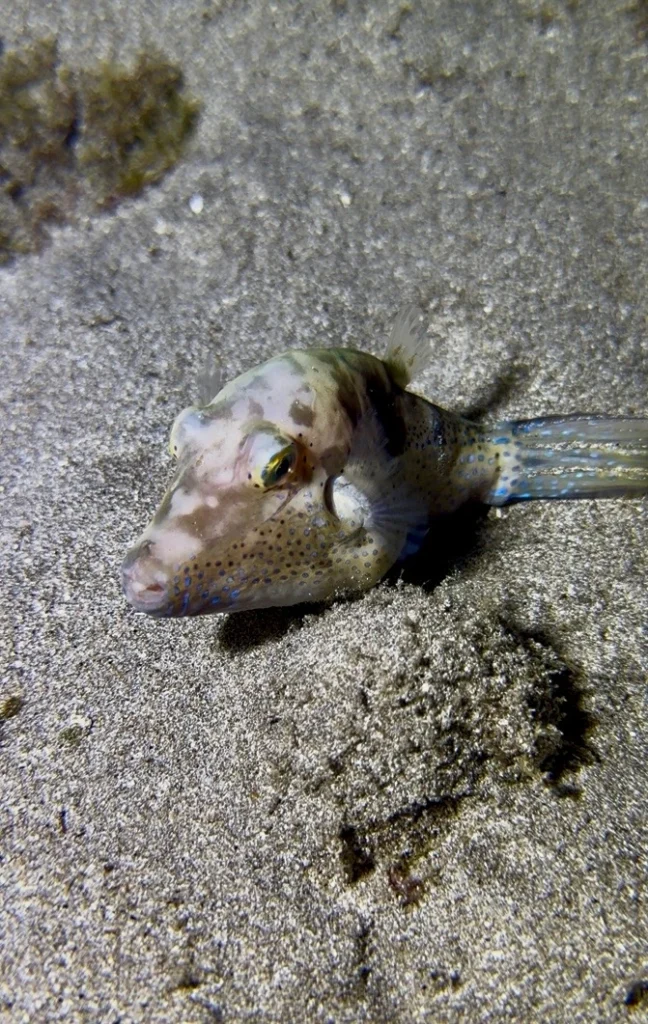
▪ Guinean puffer (Sphoeroides marmoratus): another tropical visitor, very curious, with a rounded shape body that has the ability to inflate as a defense mechanism.
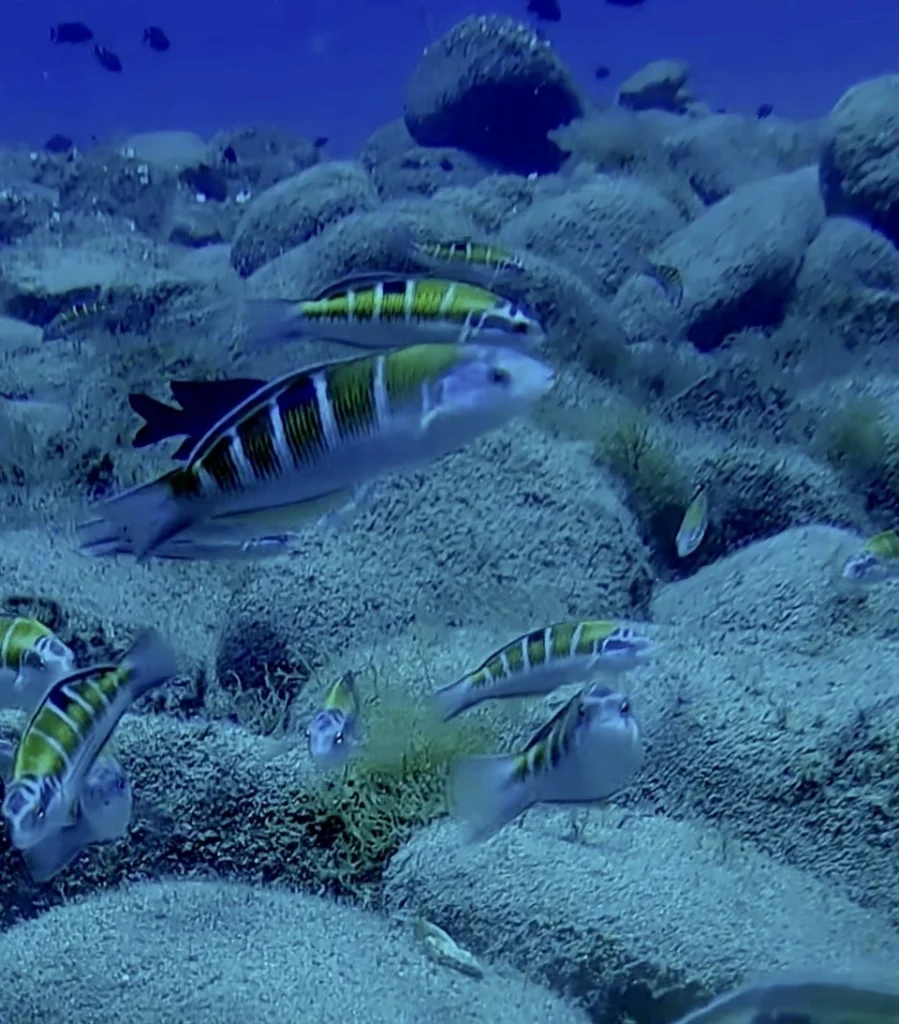
▪ Ornate wrasse (Thalassoma pavo): one of the most abundant fish in the Canarian coastal bottoms that tend to swim in groups and act as cleaners of other species. They are small, fast and very brightly colored (blue, green and yellow).
▪ Canary damselfish (Similiparma lurida): very abundant species in the Canary Islands that we can usually find on rocky bottoms, near their shelters or their nests. Their coloration is dark blue, almost black, and they have iridescent blue spots on their head and fins. They are very territorial and, sometimes, when other individuals approach them, we can observe intense chases and may even confront divers.
▪ Planehead filefish (Stephanolepis hispidus): a solitary species, although it can be observed in pairs, with variable coloration (brown, green or yellow) with spots. Its body is shaped like a rhomboidal. In addition, they have a first dorsal fin reduced to a prominent and strong
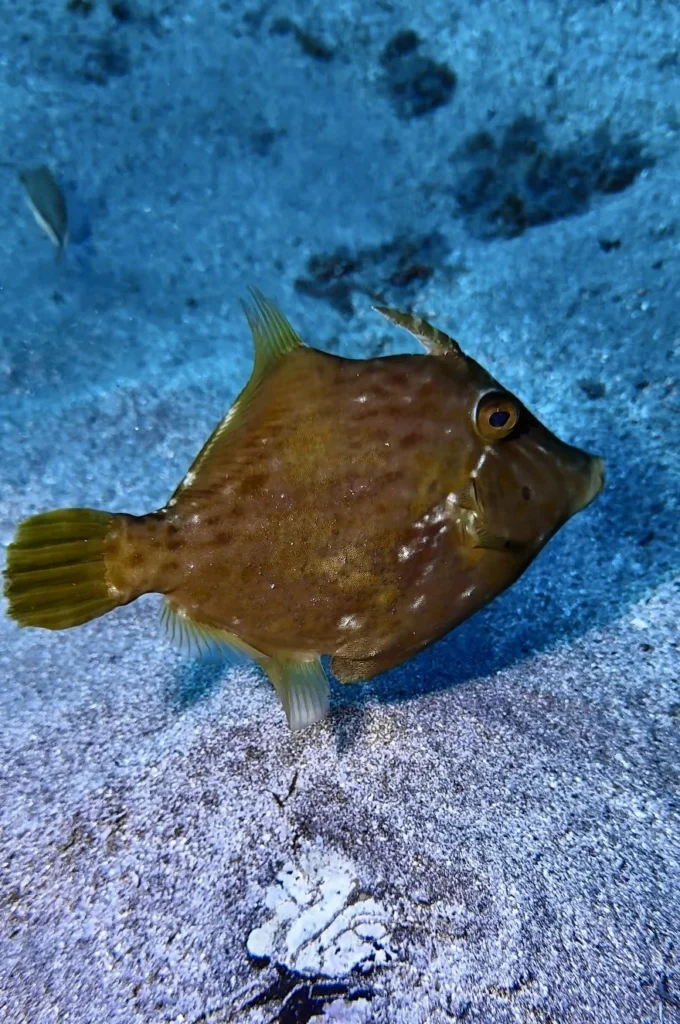
radius (as if it were a horn) and the males have the second radius of the second dorsal fin very long, as if it were a feather.
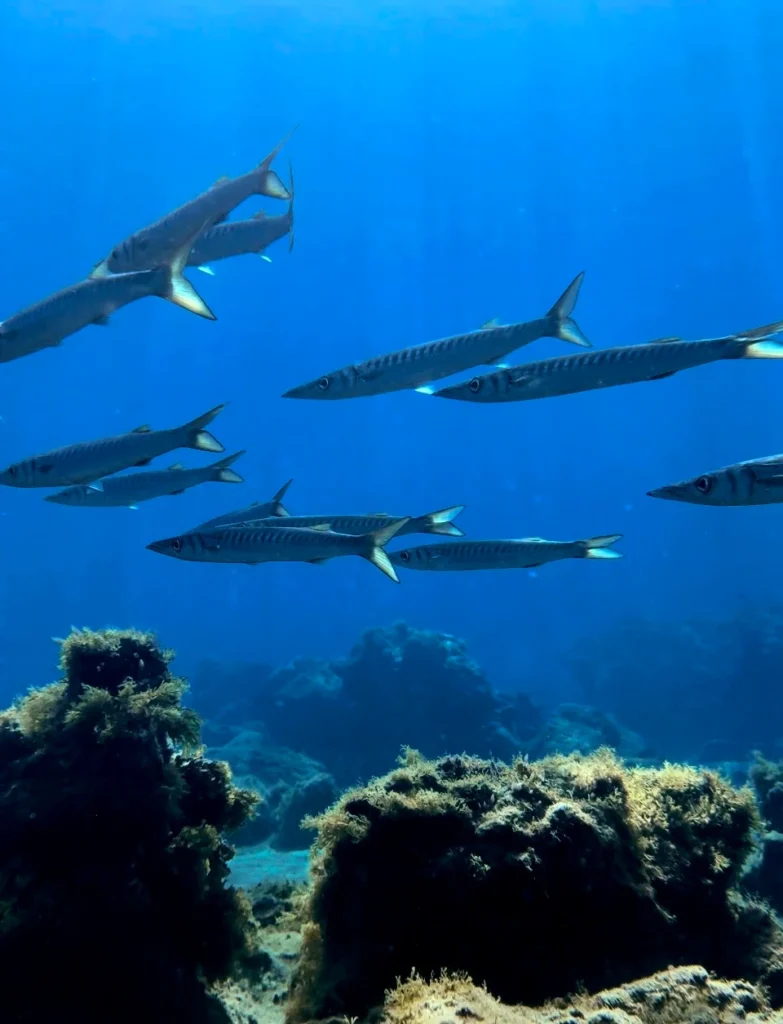
▪ Barracuda (Sphyraena viridensis): an elegant and fast predator, with an elongated body with dark transverse stripes on the sides and sharp teeth. They move in groups that form schools.
▪ Dusky grouper (Epinephelus marginatus): a very territorial and solitary species whose large specimens can reach up to 45 kilos. They are very suspicious and when they detect the presence of divers or fishermen, they swim quickly and hide in their shelters (caves and hollows).
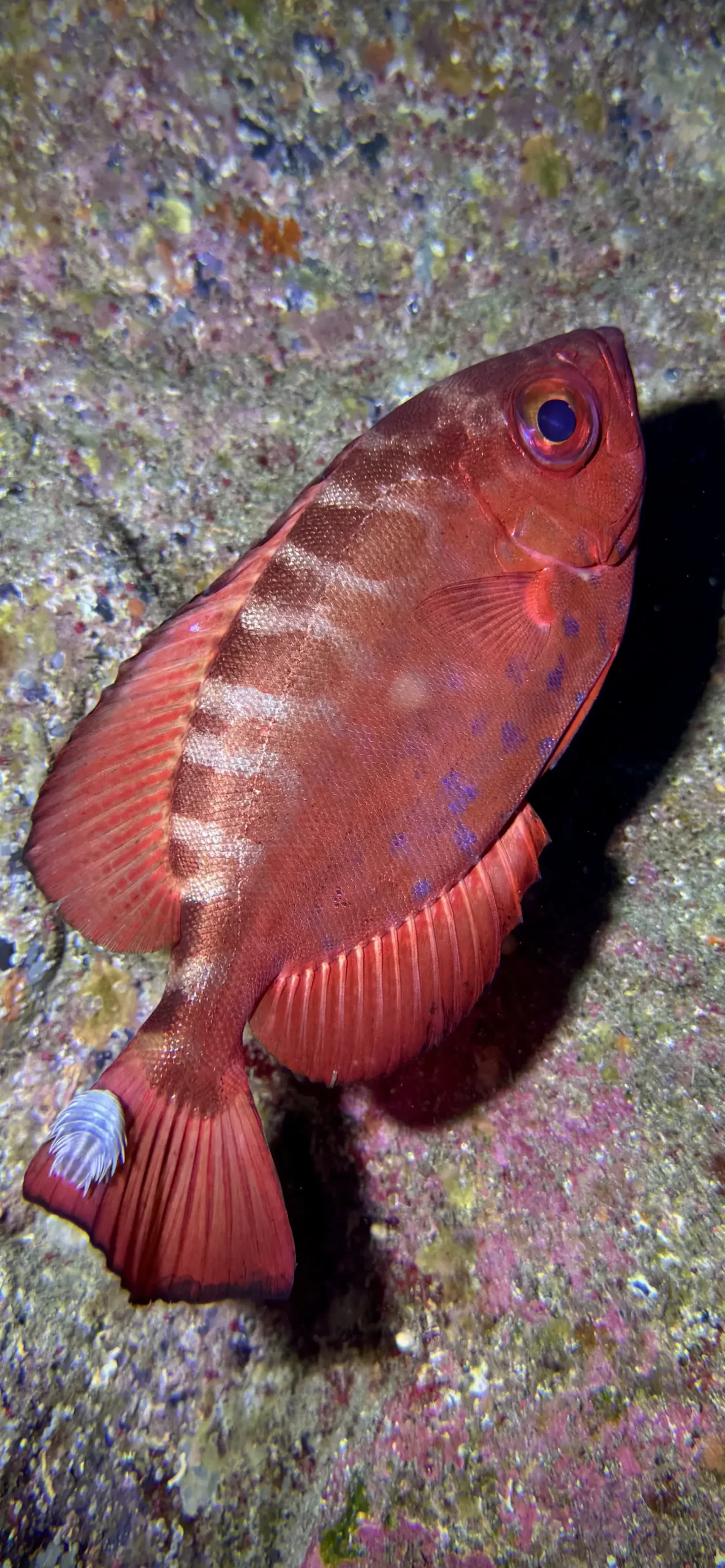
▪ Glasseye (Heteropriacanthus fulgens): they are very solitary and have nocturnal habits. They can be found usually in rocky bottoms, inside caves and hollows. They are usually parasitized by isopods that attach themselves to their fins and head.
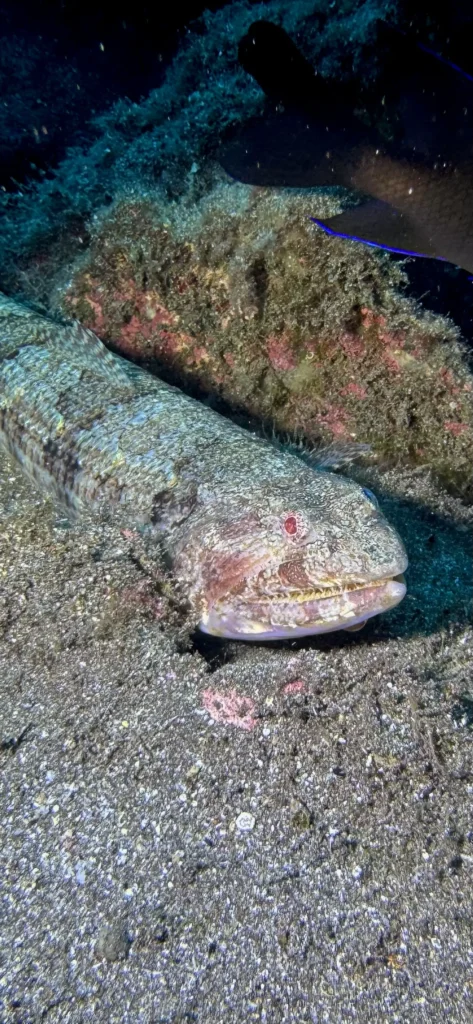
▪ Diamond lizardfish (Synodus synodus): a voracious predator of other species, with an elongated body, broad and flattened head, and large triangular mouth. Very frequent on rocky and sandy bottoms where it remains quietly lying waiting for its prey.
▪ Streaked gurnard (Chelidonichthys lastoviza): a frequent species in the Canary Islands characterized by walking on the bottom and by the spectacular coloration of its pectoral fins that, when unfolded like wings, have an intense blue border and dark blue spots.
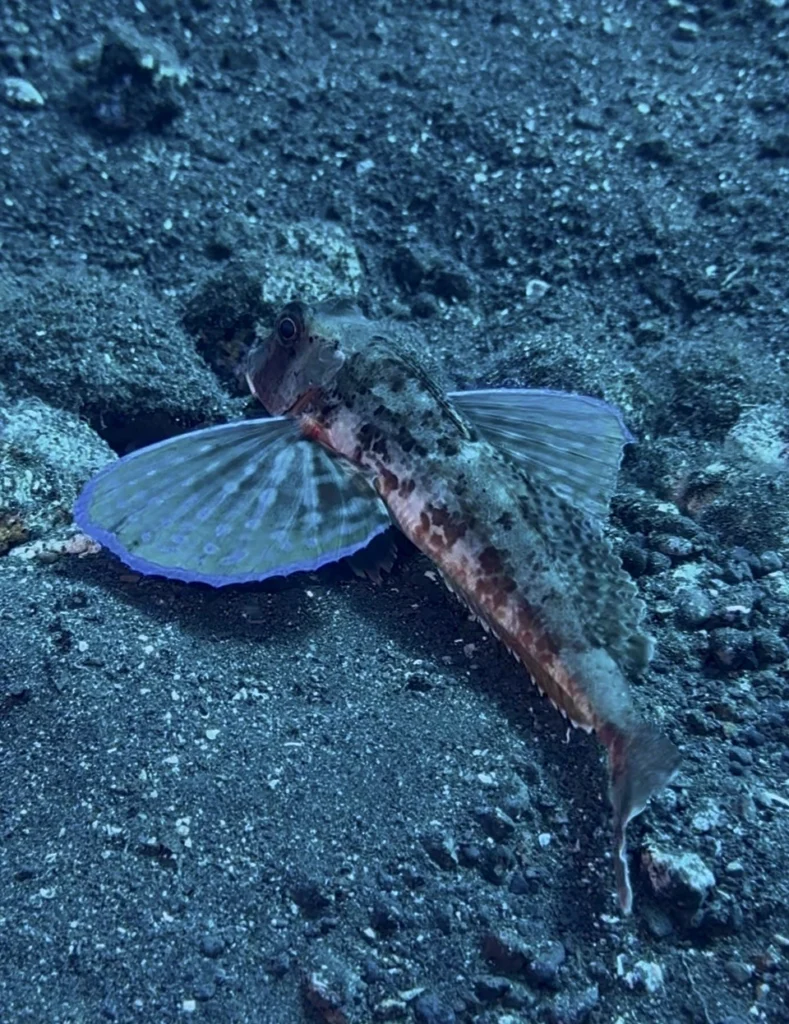
▪ Wide-eyed flounder (Bothus podas): a species with excellent camouflage that takes on the color of the substrate. They have a rounded oval body, are flattened laterally and both eyes are on their left side.
Cartilaginous Fish (Elasmobranchs)
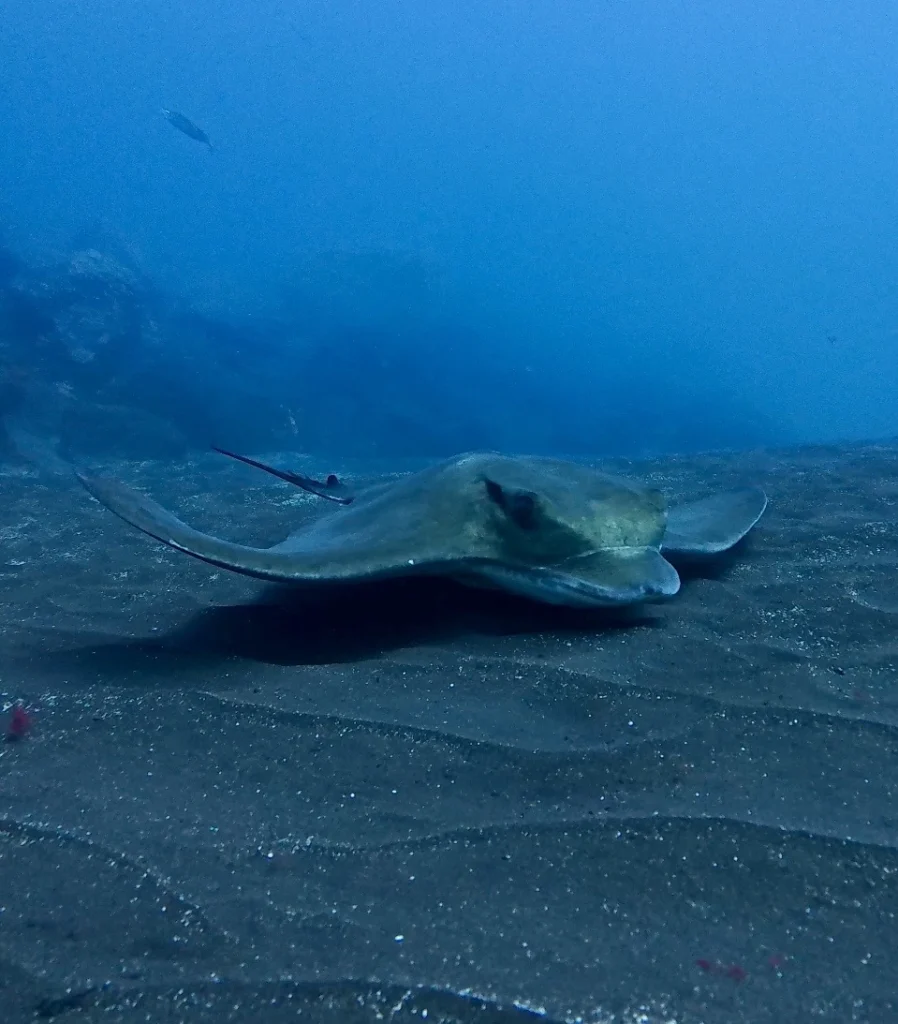
▪ Common stingray (Dasyatis pastinaca): found on sandy or sandy-rocky bottoms, their females reach larger sizes than males. Its coloration is yellowish-brownish, its body is flattened with a rhomboidal shape and its rostrum is somewhat pronounced. It tends to swim away when it feels threatened or disturbed. In the Canary Islands it is called “chucho amarillo”.
▪ Roughtail stingray (Bathytoshia lata): it is found on sand, mixed bottoms and seagrass meadows. Its coloration is dark brownish to black; its body is flattened and rhomboidal in shape and has a very long tail with hooked spines.
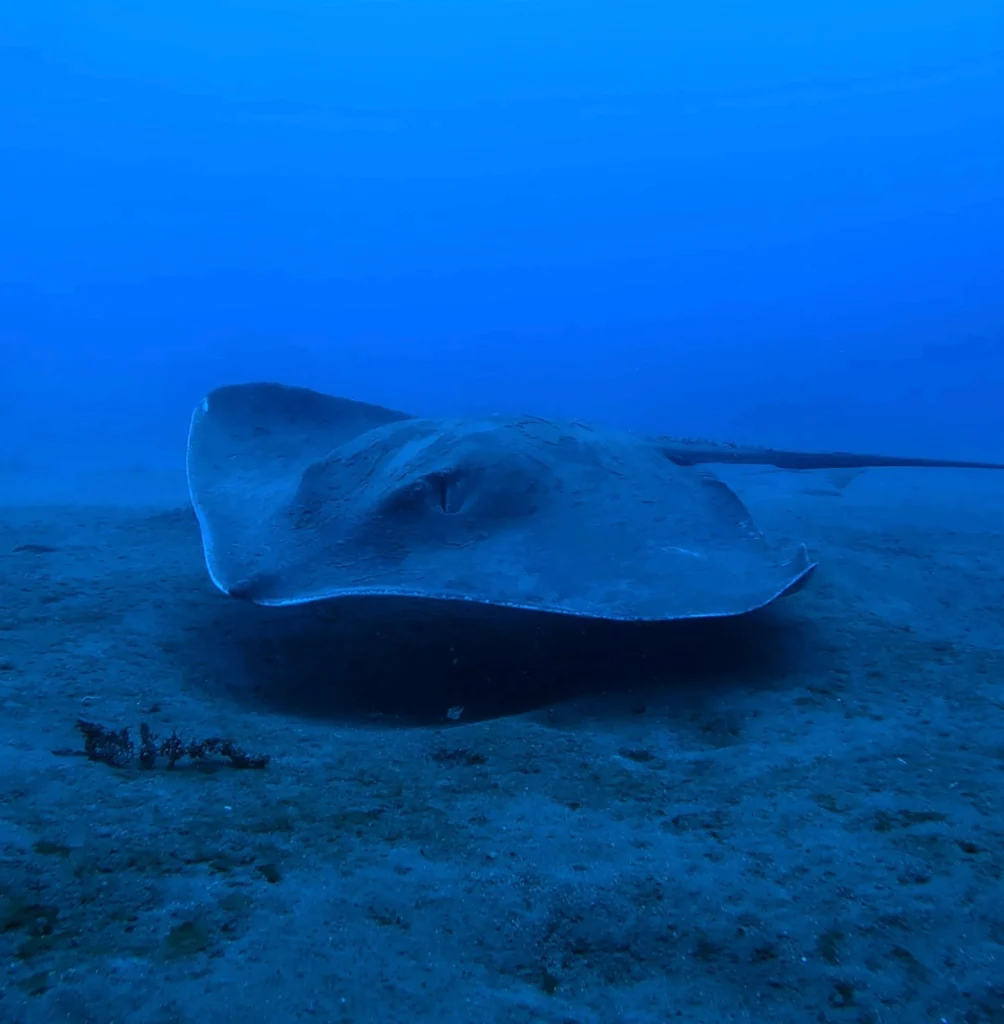
▪ Round fantail stingray (Taeniurops grabatus): it usually remains half-buried in the sand and sometimes takes refuge inside caves. Its body is flattened, oval-shaped and brown, and its tail is smaller. They usually have dark spots on the top.
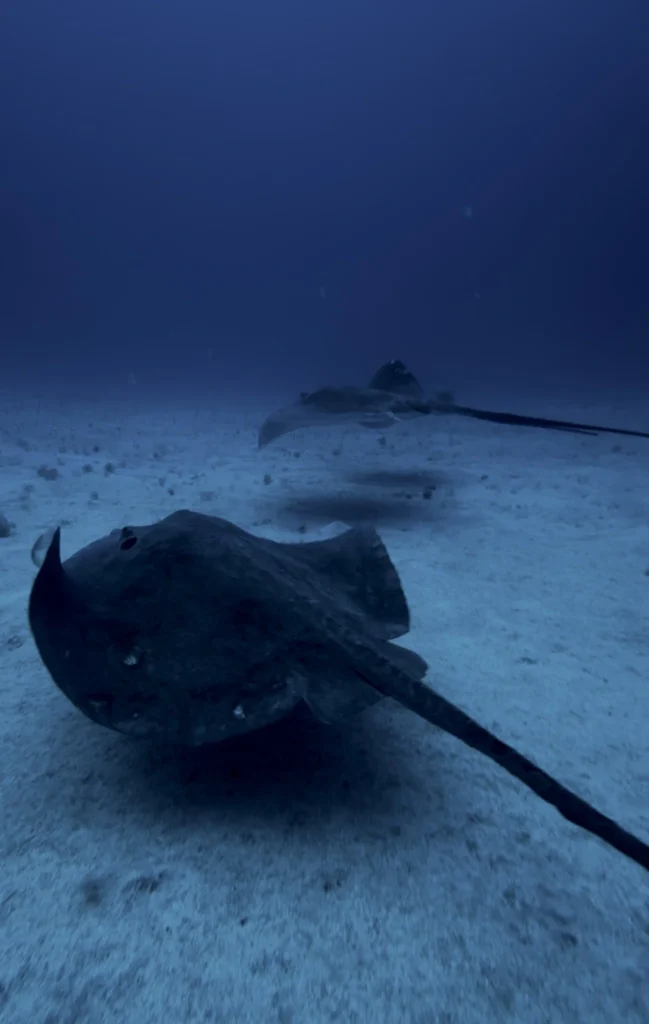
▪ Butterfly ray (Gymnura altavela): this majestic species has a triangular shape, flattened body and brown coloration with light spots, as if imitating the sandy bottom. It is commonly known in the Canary Islands as “mantelina”.
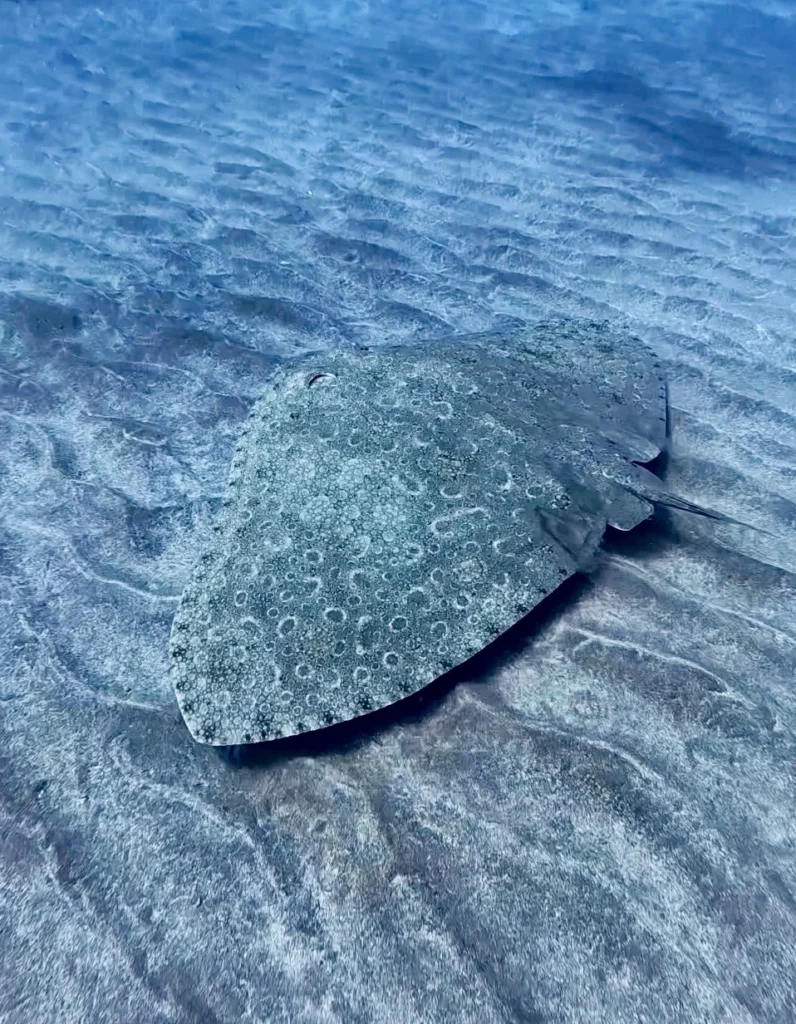
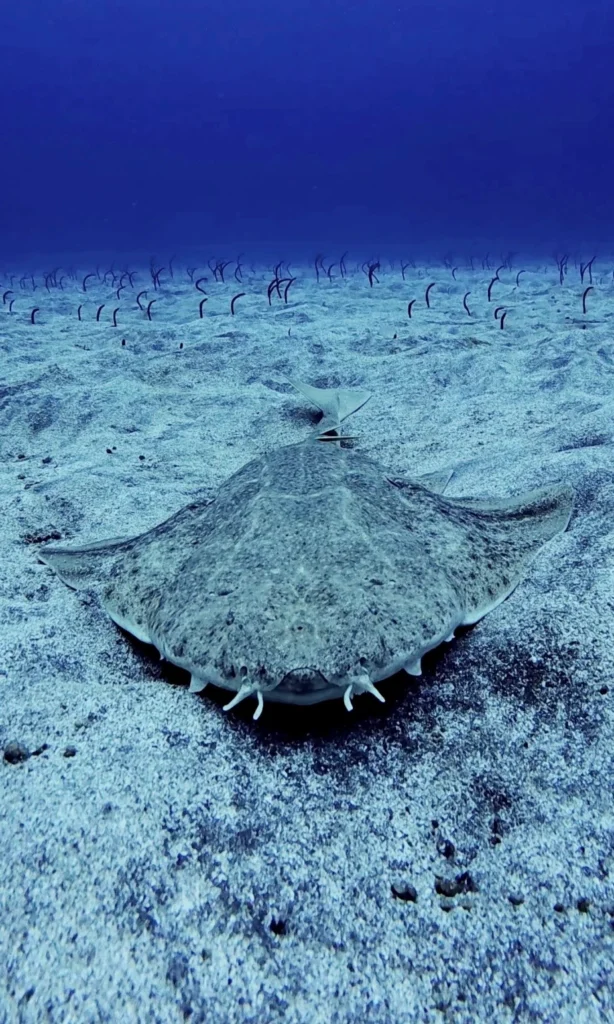
▪ Angelshark (Squatina squatina): this is the most likely species of shark to be seen in Canary waters while diving and here is the only place in the world where it can be observed while diving. This shark is adapted to benthic life, as they remain buried under the sand during the day and are masters of camouflage. They hunt their prey by suction, projecting their jaws towards the prey.
▪ Common eagle ray (Myliobatis aquila): this species of ray usually is found in sandy areas or near slopes. It has a short, rounded rostrum, yellowish-brown or brown coloration and the pectoral fins are highly developed in a triangular shape. When they swim, it looks like the flight of a bird as its pectoral fins look like wings.
Sea Turtles
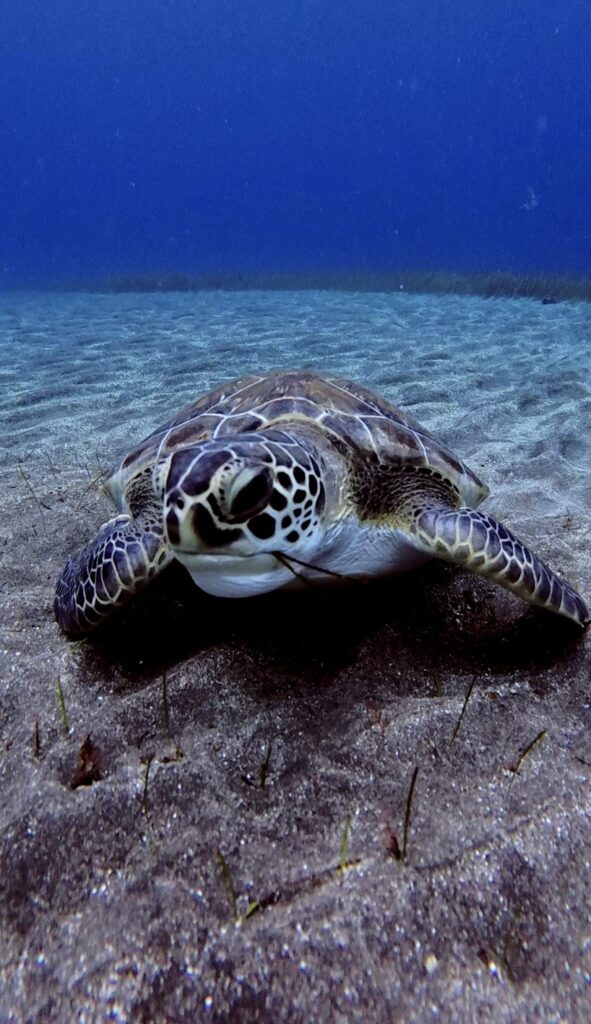
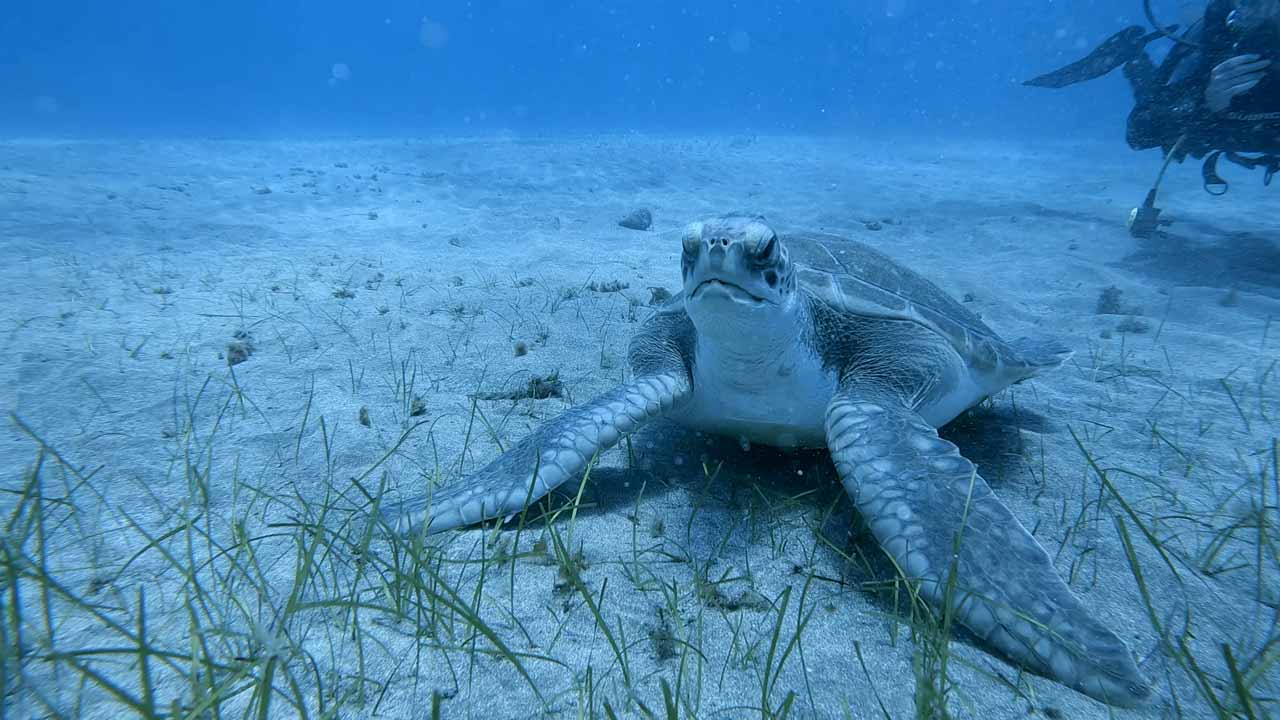
▪ Green turtle (Chelonia mydas): in the Canary Islands we only find juvenile individuals of this species, which come from Africa, the Caribbean and even Brazil, and stay temporarily on the islands until they almost reach adulthood. During their juvenile phase they live very close to the coast, feeding on seagrass and algae, and are very faithful to their feeding grounds. When they reach sexual maturity, they migrate thousands of kilometers back to their breeding grounds.
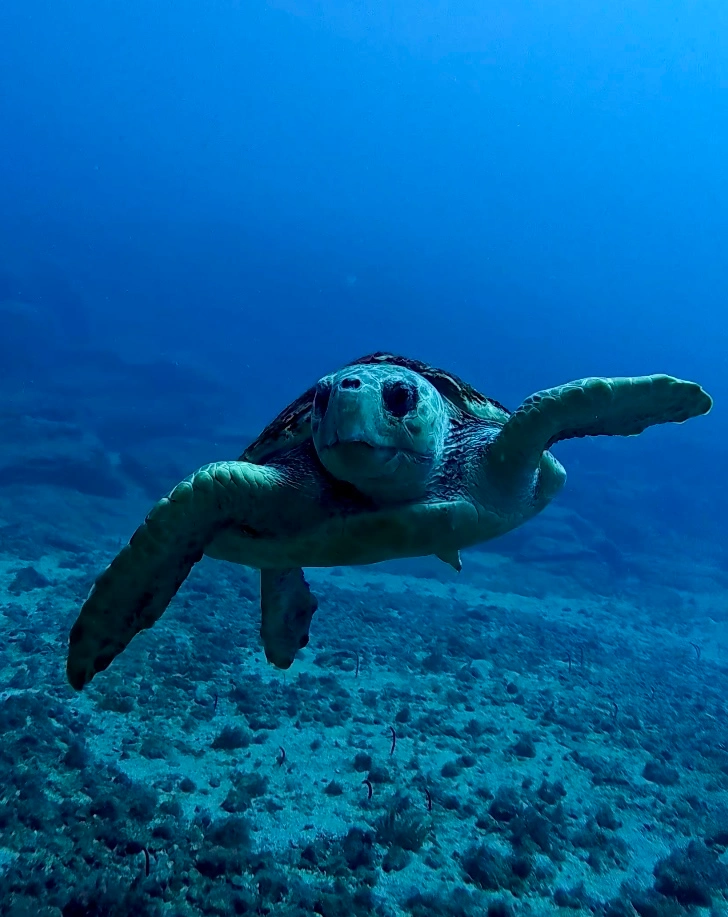
▪ Loggerhead turtle (Caretta caretta): we find juvenile individuals, with small and mediumsizes, in our waters. They have the ability to take advantage of the sea currents to moveand because they are cold water animals, they rest on the surface taking advantage of thesun’s rays to warm up. They are easy to observe in areas farther from the coast, unlike thegreen turtle.
Mollusks
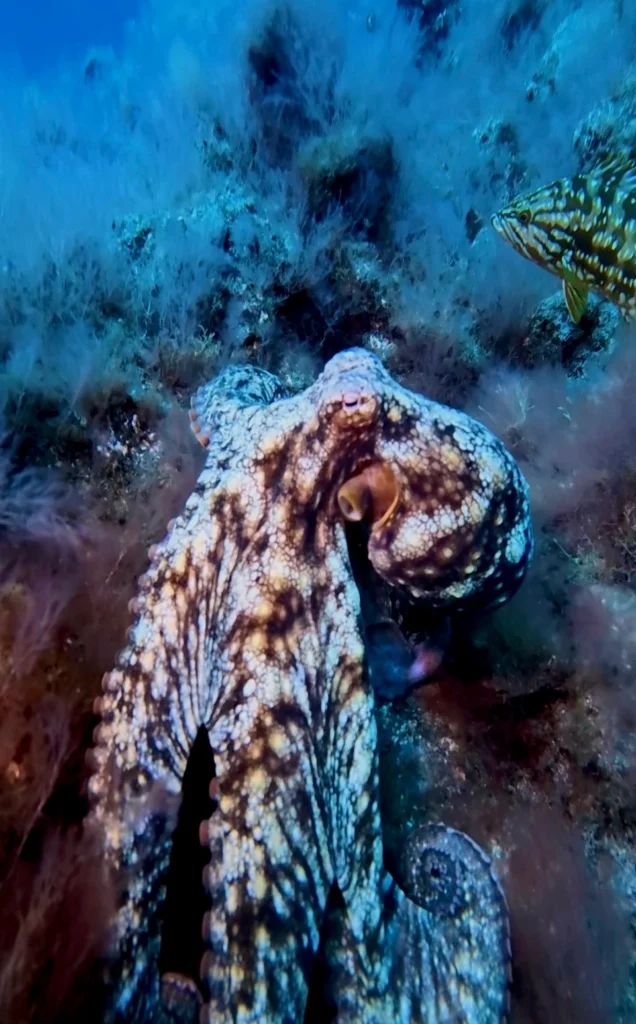
– The common octopus, Octopus vulgaris, is a highly skilled camouflager known for its intelligence and curiosity. Active mainly at night, it preys on rocky bottoms and retreats into hiding during the day, covering itself with various materials to blend in.
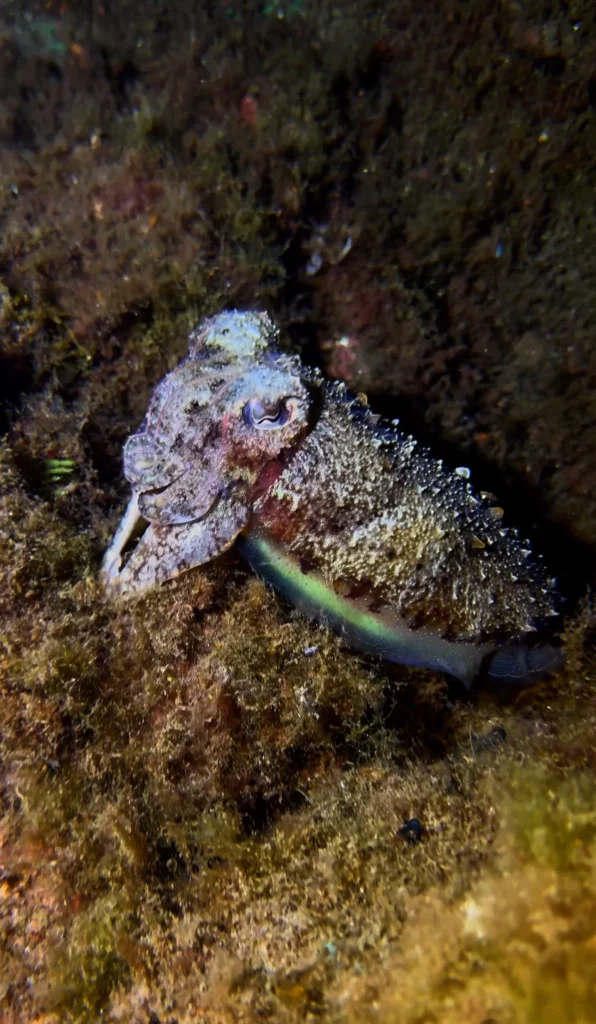
– The cuttlefish, Sepia officinalis, is another expert in mimicry, able to change its appearance to match the surroundings. Like other cephalopods, it can release ink as a defense mechanism and raise its tentacles to mimic horns when threatened.
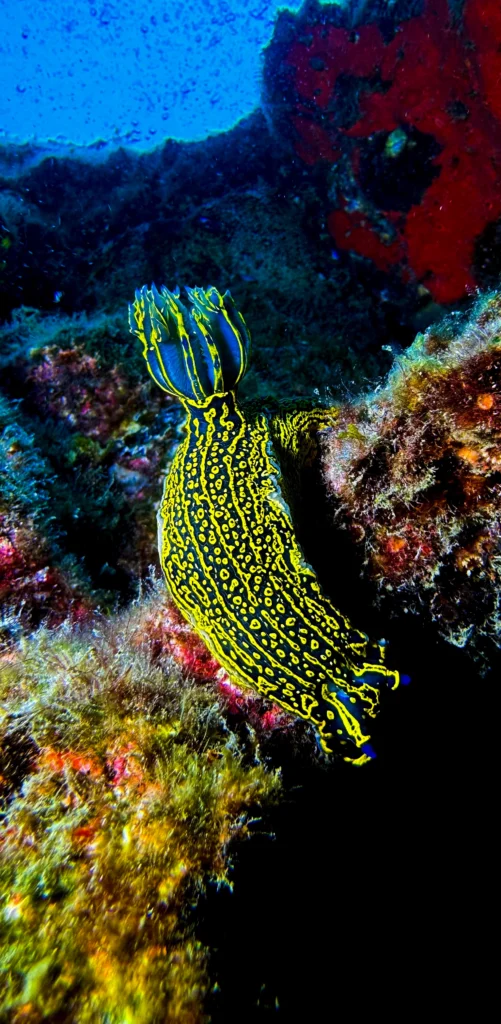
– The sea slug, Felimare picta, is a nudibranch commonly found in the rocky waters of the Canary Islands. Its dark blue body is adorned with yellow stripes and dots, with exposed gills resembling a feathered crown.
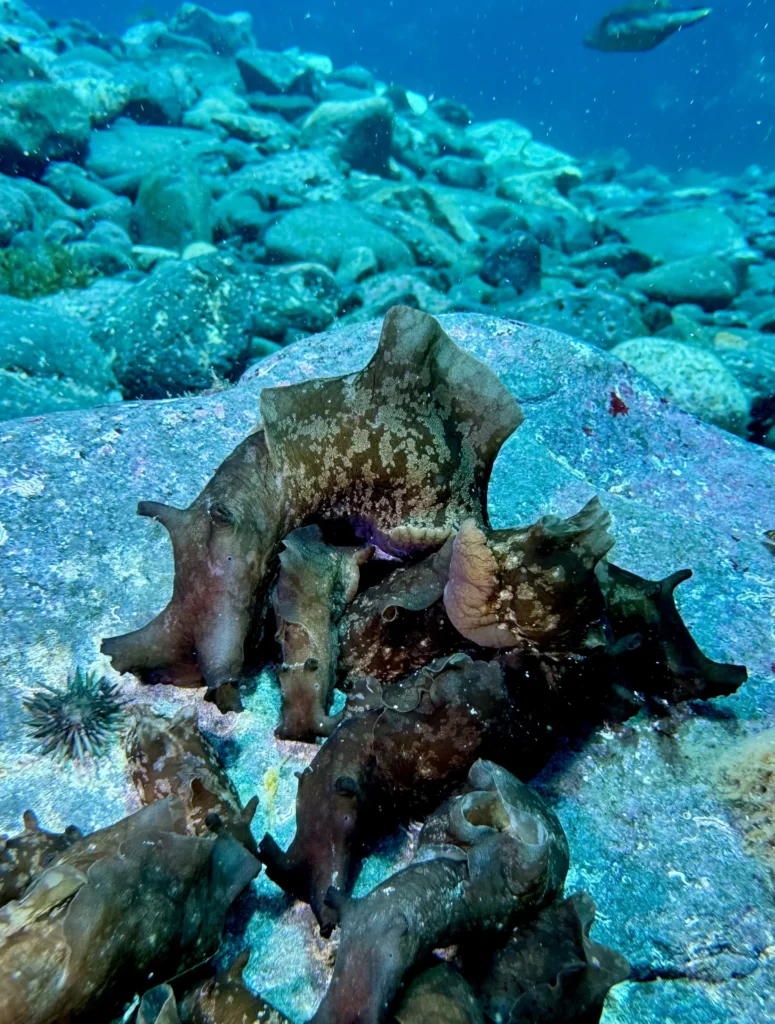
– The sea hare, Aplysia dactylomela, inhabits rocky bottoms with vegetation, primarily feeding on red algae. These creatures can produce violet ink when threatened, thanks to their diet of algae.
Crustaceans
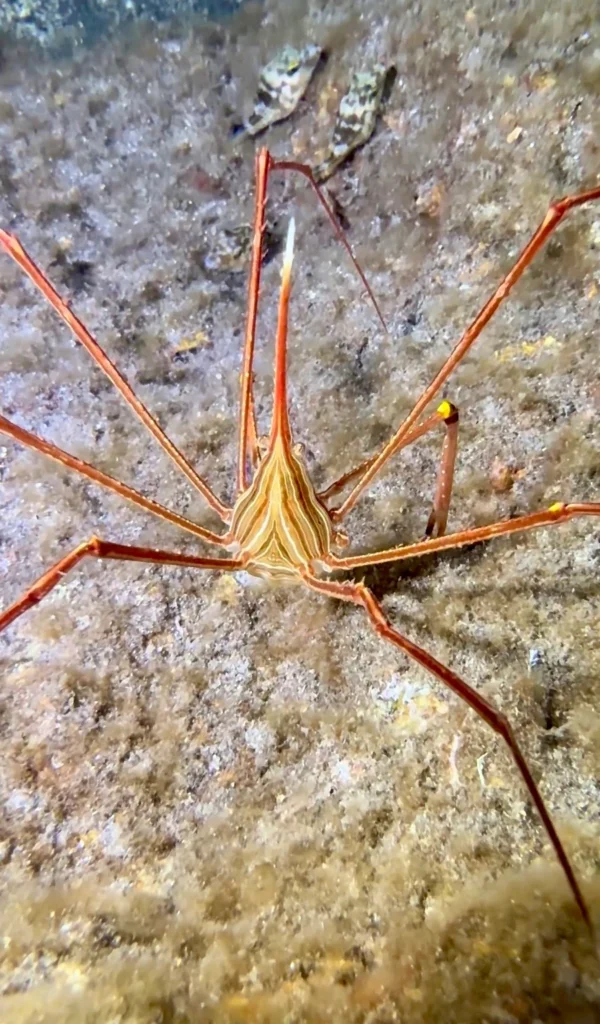
– Arrow crab (Stenorhynchus lanceolatus) is a species that seeks shelter in hollows and caves. Its distinctive pointed face features a serrated edge, reflected in its name. The triangular carapace is smaller in comparison to its elongated legs.
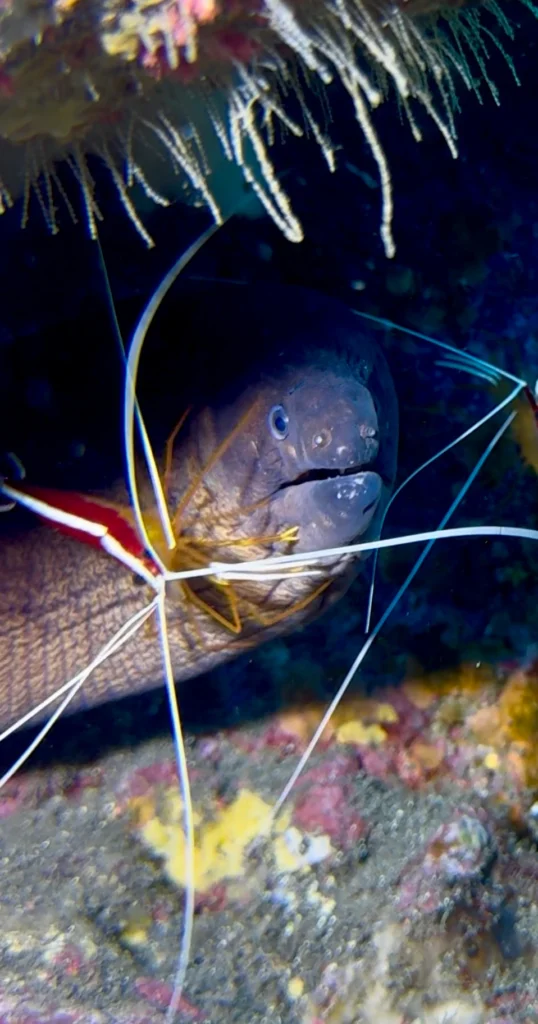
– The Red-backed cleaner shrimp (Lysmata grabhami) is orange with a thin white band between its eyes. This species acts as a cleaner by removing parasites from the mouth, gills, and skin of various fish like moray eels, stingrays, and damselfishes.
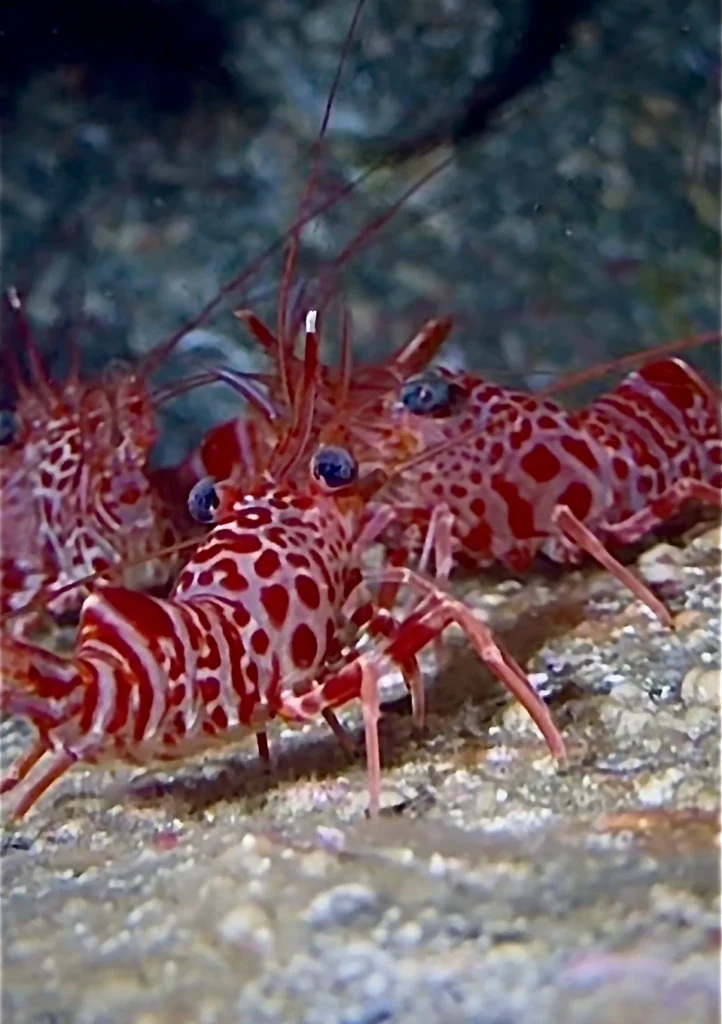
– The Atlantic dancing shrimp (Cinetorhynchus rigens) is unique in the Canary Islands due to its face joint that enables up-and-down movement. Excited individuals demonstrate fast vertical jumps when seeking shelter. Their red bodies exhibit white reticulations and bands, complemented by a lengthy rostrum.



0 Comments