

Tenerife is widely considered one of Europe’s most versatile year-round diving destinations. Shaped by volcanic forces, the island offers dramatic underwater topography, with lava flows, arches, caverns, and drop-offs that descend into the Atlantic blue. These volcanic landscapes support abundant marine life. Schools of barracuda and bream move along the reefs, moray eels hide within the rocks, stingrays cruise over sandy plains and one of the most reliable places in Europe to encounter the Atlantic angel shark ,a critically endangered species that rests camouflaged on the seabed and has become a defining symbol of the island’s waters. Tenerife is also home to some fascinating wreck diving. Several shipwrecks around Tenerife have become thriving artificial reefs and exciting dive sites for recreational divers.
In this article, we’ll talk about the best wreck diving Tenerife and the history and marine life that surround them.
Table of Contents
El Peñón
- Location: Tabaiba.
- Site access: Shore diving.
- Depth: 22-30 meters.
- Certification: Advanced.
History
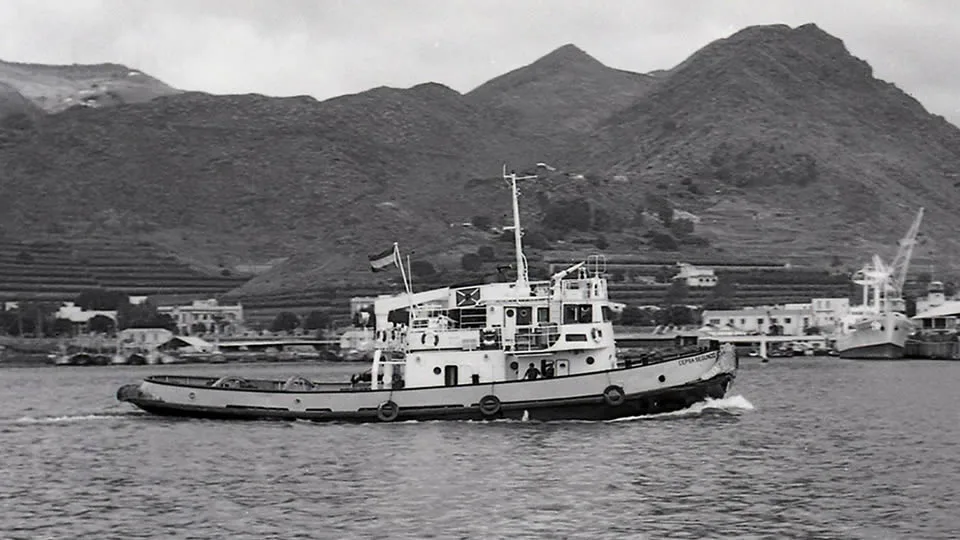
El Peñón began life as the tugboat Cepsa Segundo, which entered service in October 1958, and was assigned the port of Santa Cruz de Tenerife as a part of CEPSA’s auxiliary fleet.
Built in the Seville shipyard as the fourth unit of the Dutch-designed “Ursus” series, the vessel was 27m long with 284-tonne displacement, fitted with a powerful 1,100-horsepower engine (allowing service speed of 11 knots) and equipped for firefighting alongside its towing duties. On the afternoon of 20 July 1971, while assisting the British liner Canberra in a berthing maneuver, a crew error caused Cepsa Segundo to sink in front of dozens of onlookers; fortunately, all five crew members were rescued. The tug was later located about 200m from the south pier at a depth of 55m and refloated, after which it was rebuilt in Sevilla, fitted with a new engine and twin funnels, and returned to service under the name R. Peñón. It continued work in Spanish waters for decades, returning to Tenerife in 2002 as a reserve unit, until on 11 July 2006 it made its final voyage when it was intentionally sunk off Tabaiba to serve as an artificial reef and marine biotope.
Dive site
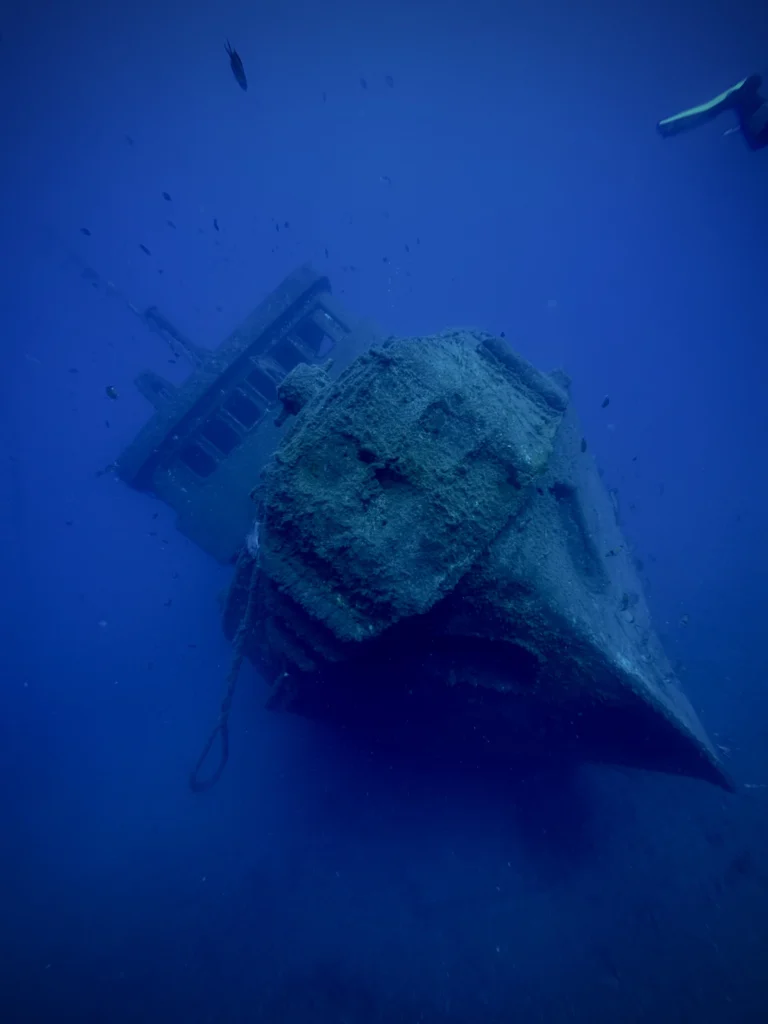
Today, El Peñón rests at a depth of 20-32m, with its bow raised and heeling approximately 30° to its starboard side. The wreck remains intact, offering divers the opportunity to explore details such as winches, bollards, railings, and the propeller. Several exciting swim-throughs and penetration opportunities are accessible to properly trained divers, including the captain’s bridge, deck-level cabins within the superstructure, and the engine room.
Marine life around El Peñón thrives on the artificial reef. Schools of damselfish, bream, and sardines gather densely around the structure, while larger species such as barracuda, amberjack, and trumpetfish patrol the periphery. Octopus, cuttlefish, and even seahorses often shelter within recesses formed by the wreck and surrounding rocks. Rays and other bottom dwellers frequently rest on the sand around the hull. The wreck’s straightforward shore access makes El Peñón suitable for a wide range of recreational divers.
El Condesito
- Location: Punta rasca.
- Site access: Boat dive.
- Depth: 6-20 meters.
- Certification: Open water.
History
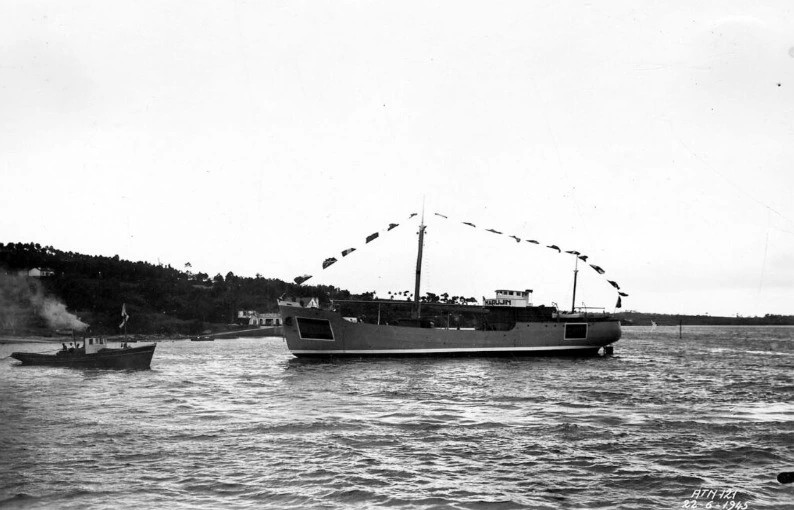
El Condesito began service as the coastal cargo vessel named Marujín, launched on 22 June 1945 from the ASTANO shipyard in Fene (A Coruña). Built with a riveted steel hull, it measured 41m in length with a beam of around 8m and was powered by a 350-horsepower steam engine driving a single propeller, giving it service speed of about 9 knots.Designed as a durable post-war freighter, it featured multiple cargo holds suited for bulk goods and general freight, serving the practical demands of Spain’s recovering maritime trade network. In 1948, following a change of ownership, it was renamed El Condesito. For the next quarter century, it operated as a small but reliable coastal trader, transporting supplies between mainland Spain, and the Canary Islands. Like many vessels of its class, it became part of the logistical backbone of regional commerce, carrying cement, construction materials, and other essential cargo during a period of steady economic development in the islands.
On 27 September 1973, while carrying a load of cement from Arguineguín (Gran Canaria) to Los Cristianos, it encountered difficulties off Punta Rasca. Engine failure in rough conditions left it exposed close to shore. Despite assistance from local maritime services, the ship struck the rocks, prompting the rescue of the crew. El Condesito subsequently sank to the seabed.
Dive site
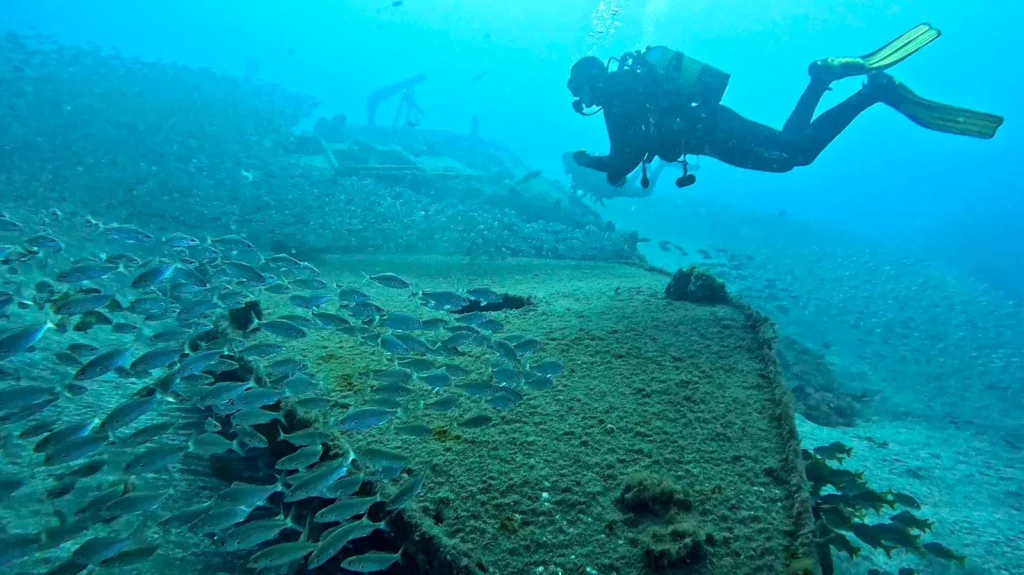
Today, El Condesito lies at a depth of 6-20m, broken and scattered across the sandy seabed off Punta Rasca, a result of both the original sinking and decades of Atlantic swell. Several structural sections remain identifiable, including the stern, ribs of the hull, sections of the cargo hold, the boiler, and engine components, though the superstructure has largely collapsed.
Having been submerged for over five decades, the wreck has fully integrated into the surrounding ecosystem, its steel structure now serving as an established artificial reef. Encrusted with algae and marine growth, the fragmented hull provides shelter for a variety of species. Schools of bream and sardines gather above the wreckage, damselfish cluster around the metal surfaces, and moray eels occupy cavities within the collapsed sections. Octopus hide in crevices, while rays and angel sharks rest on the surrounding sandy seabed. The wreck of El Condesito is easily accessible to divers, reached by a short (approximately 20 minutes) boat ride from the harbor of Las Galletas.
El Meridian
- Location: Palm-Mar.
- Site access: Boat dive.
- Depth: 18-30 meters.
- Certification: Advanced
History
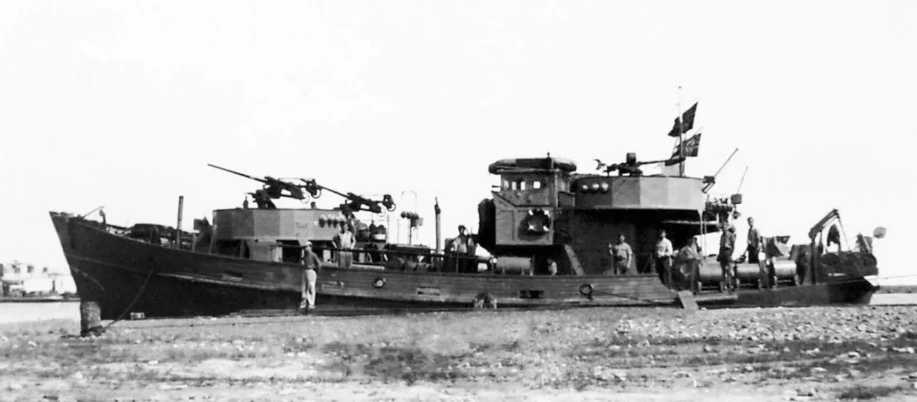
El Meridian was originally launched as KFK 469, a Kriegsfischkutter built in 1944 in Swinemünde, Germany for the German Kriegsmarine. It belonged to a class of small (24 meters in length, with a displacement of 110-tonnes), wooden-hulled auxiliary vessels constructed in significant numbers during World War II for coastal patrol, mine clearance, escort duties, and anti-submarine operations. KFK 469 served in the 31st Minesweeping Flotilla (31. Minensuchflottille), Group D, and, like other vessels of its class, was armed with 37mm and 20mm anti-aircraft guns.
After the war, the vessel was demilitarized and eventually restored in 1973. In 1974, the ship arrived in Santa Cruz de Tenerife from Germany and was later relocated to Los Cristianos, where it operated for over three decades as a whale-watching and excursion boat. In 2004, it sank following an incident in the harbor of Los Cristianos. Finally, in 2005, the vessel was refloated and moved to its final resting place off Palm-Mar. Today, the former wartime minesweeper serves as an artificial reef and represents one of Tenerife’s most historically distinctive wreck dives.
Dive site
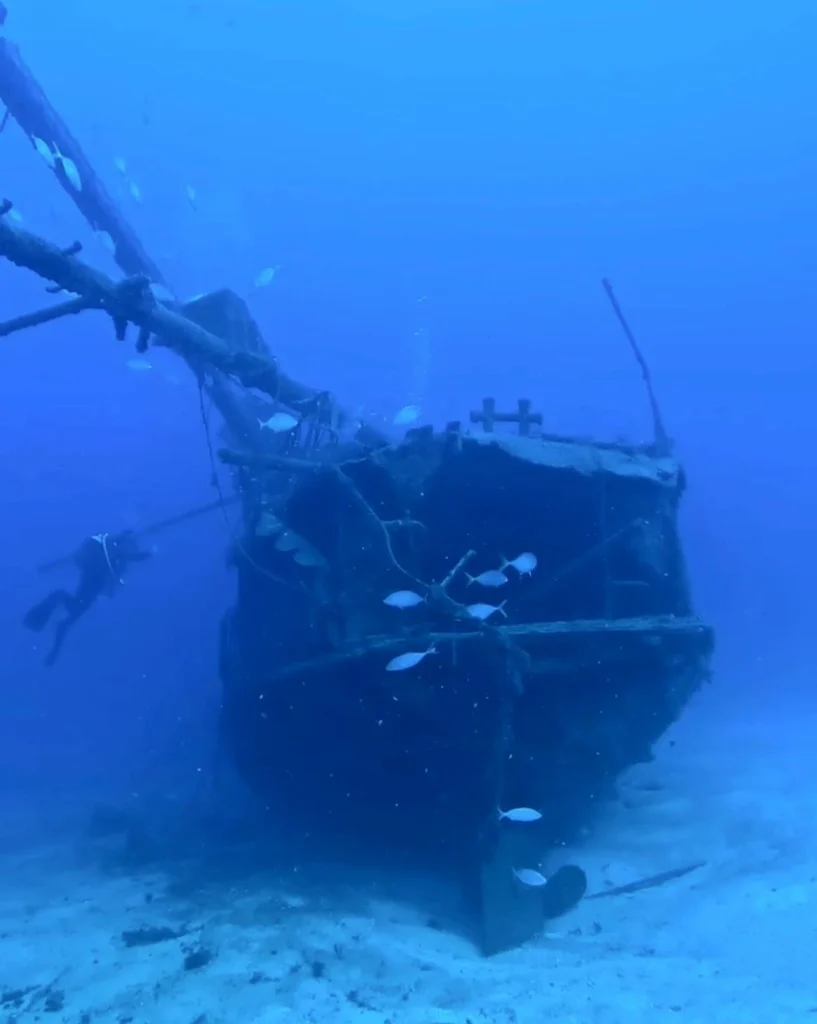
Following its scuttling off the coast of Palm-Mar, we can find El Meridian resting at a depth of 18-30m, accessible with a short (approximately 10 minutes) boat ride from the harbor of Los Cristianos. The wreck features a largely intact hull with clearly recognizable features.
Marine life around El Meridian reflects its position between sand and nearby rocky habitat. Schools of baitfish, such as sardines, frequently gather around the structure, attracting amberjack that can be observed hunting in coordinated bursts. Moray eels and octopus can be seen in adjacent rocky sections, alongside local reef species such as groupers. A broad variety of rays are regular visitors on the surrounding sand. Dolphins are occasionally sighted in the area and may pass by during ascent or safety stops, an opportunistic encounter rather than an expectation.
Los Gemelos (Twin wrecks)
- Location: Puerto Colon.
- Site access: Boat dive.
- Depth: 20 meters.
- Certification: Advanced.
Twin-wreck site off Puerto Colón, consisting of two wrecks resting in proximity at a depth of around 20m. The two vessels, a recreational fishing boat (12m in length) and a steel yacht (15m in length) were sunk intentionally in the late 1990s to create an artificial reef for tourist submarine excursions and recreational scuba divers. Despite their relatively modest size, Los Gemelos attract an abundance of marine life. Schools of baitfish attract predators, such as tunas and amberjacks, creating a spectacle for divers. Several species of rays can be spotted in the surrounding sandy area, while macro life such as shrimps and nudibranchs inhabit the structures.
Whether you are a wreck-diving enthusiast eager to explore one of Tenerife’s fascinating wrecks, or a non-diver looking for your first underwater experience, do not hesitate to contact Barbarian Diving and we will tailor an experience that brings these amazing underwater stories to life
FAQ
Is wreck diving in Tenerife suitable for beginners?
Some wrecks, such as El Condesito, are shallow enough for newly certified divers, while deeper sites like El Peñón are better suited for advanced divers.
What marine life can you see around Tenerife wrecks?
Divers frequently encounter barracuda, moray eels, rays, octopus, and occasionally the Atlantic angel shark resting in nearby sandy areas.
Do you need special training for wreck diving?
Basic exploration is possible for recreational divers, but wreck penetration requires additional training and proper equipment.



0 Comments