You finish your Open Water course, you log a few dives, and then at some point you start wondering what comes next. Deep diving? Wreck diving? Night diving? Before any of that, there’s one upgrade worth doing first, and it’s the one we recommend to almost every diver who walks through our door in Los Cristianos.
It’s called SSI Enriched Air Nitrox, and once you try it, you’ll wonder why you waited.
What Is Nitrox?
Standard scuba tanks are filled with air: roughly 21% oxygen, 79% nitrogen, plus a few trace gases. Nitrox swaps some of that nitrogen for extra oxygen, so a typical mix like EAN32 gives you 32% oxygen instead of 21%.
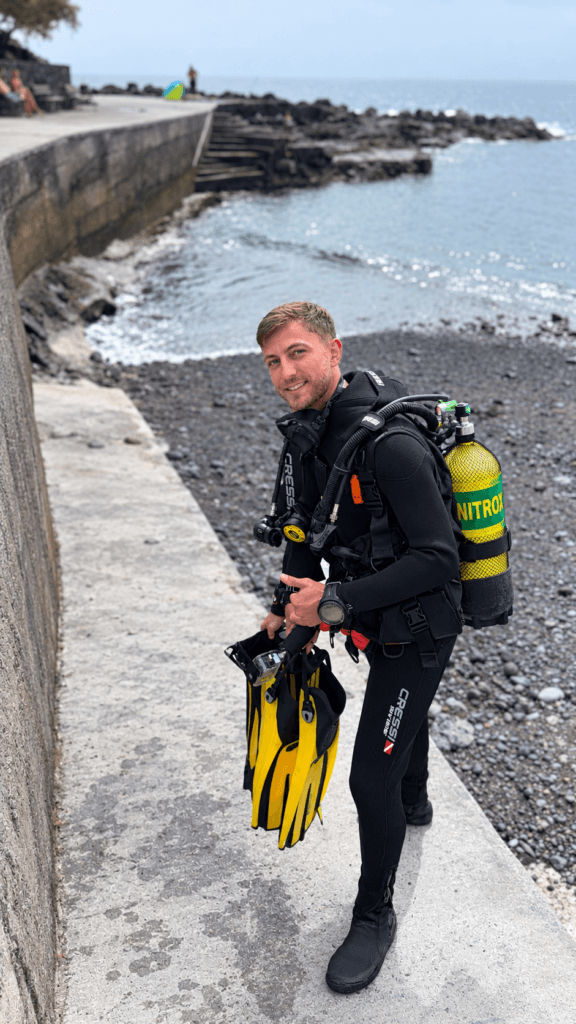
You’ve probably seen the tanks already without knowing it. Yellow and green band, labelled “ENRICHED AIR.” That colour coding is universal, used by every dive centre and liveaboard in the world.
The two most common mixes you’ll dive are EAN32 and EAN36. At Barbarian Diving the SSI course certifies you for anything up to 40%, which covers everything you’ll want for recreational diving.
Why Bother? The Real Benefits
Here’s the thing people get wrong about nitrox: the oxygen percentage isn’t the point. The benefit is the nitrogen you don’t breathe.
Every dive, nitrogen dissolves into your tissues under pressure. The more you absorb, the sooner your no-decompression limit runs out and the longer you have to wait on the surface before going back in. Nitrox cuts that nitrogen load significantly, and the effects are real and immediate.
At 18 metres on regular air, your NDL is around 56 minutes. On EAN32 at the same depth, it jumps to about 95 minutes. That’s nearly 40 extra minutes on Tenerife’s reefs from a single course. Not from better technique, not from a new computer, just from breathing a different gas.
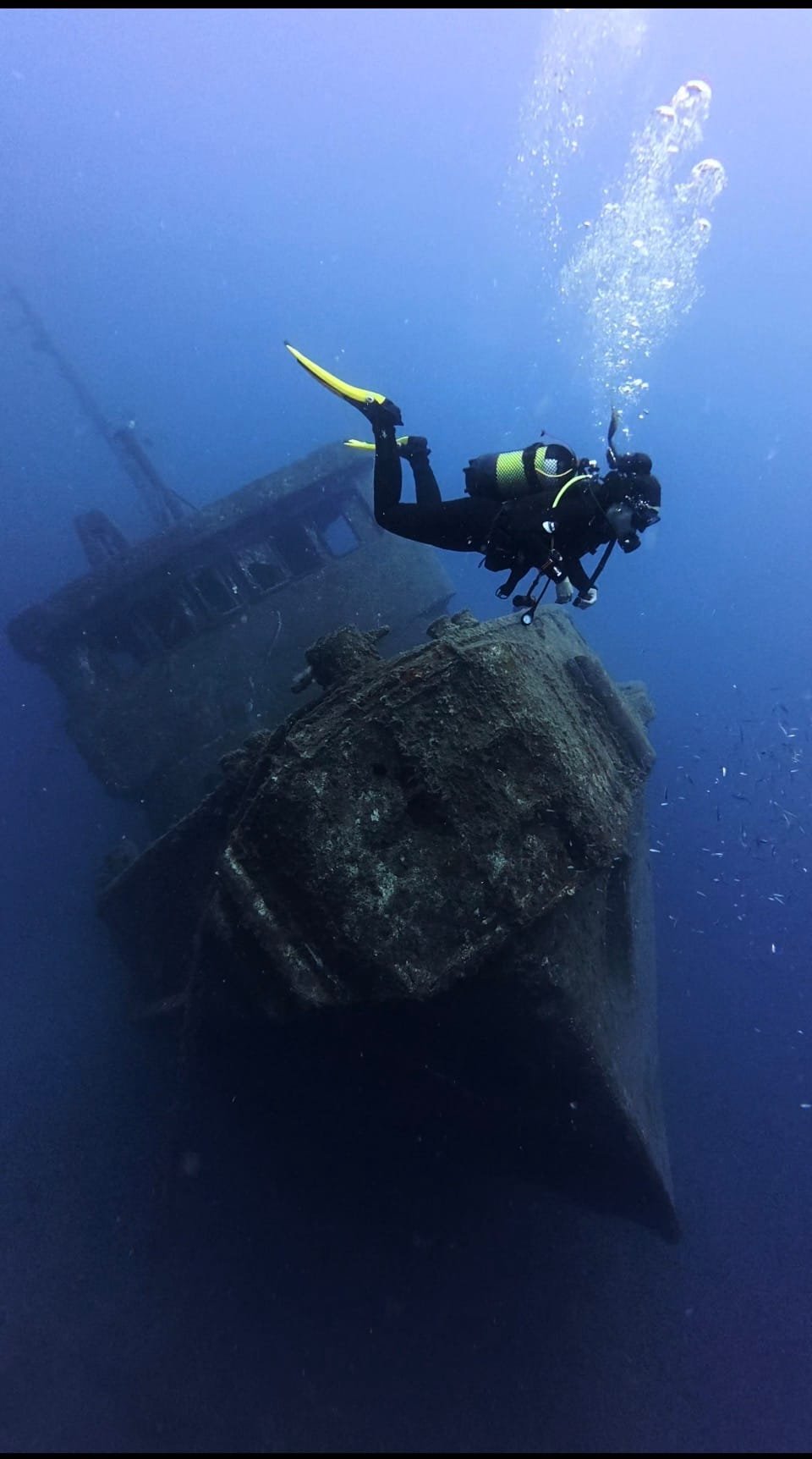
Surface intervals shorten too, because your body has less nitrogen to clear. On a two-tank day that’s a noticeably shorter wait between dives. On a week-long trip, it adds up to hours of extra underwater time.
And then there’s the fatigue. Nitrox divers consistently report feeling less wiped out after a day in the water. The science behind this is still being debated, but after seeing it in hundreds of students, we believe it. Enriched air just feels different.
Finally, and this one gets overlooked: even if you dive a nitrox profile exactly as you would on air (same depths, same times), your body has absorbed far less nitrogen than your computer expected. That’s a genuine safety margin built into every dive, for free.
The Rules You Have to Know
This is where a lot of people tune out because it sounds technical. Don’t. Understanding the limits is what makes nitrox safe, and the SSI course makes it straightforward.
The issue is oxygen toxicity. At normal recreational depths, oxygen is harmless. But push it to high partial pressures, which happens when you go too deep on a high-oxygen mix, and it becomes dangerous. We’re talking about convulsions underwater, with no warning signs beforehand. It’s rare, but it’s real, and it’s why certification matters.
In practical terms, every nitrox mix has a Maximum Operating Depth. EAN32 goes to 34 metres. EAN36 goes to 29 metres. Stay above those depths and you’re fine. Go below them and you’re in the danger zone.
Before every nitrox dive, you also need to analyse your own cylinder with an oxygen analyser and write down the result. Tanks occasionally get filled with the wrong mix. Checking takes two minutes and means your dive computer is set correctly. We have analysers at the centre and every student uses one during the course.
One more thing, and this comes up constantly: nitrox does not let you dive deeper. The opposite is true. Higher oxygen percentages mean shallower limits. Nitrox is purely for more time at the depths you’re already diving. If you want to go deeper, that’s what the SSI Deep Diving Specialty is for.
Equipment: Do You Need Anything New?
Probably not. Most dive computers made in the last decade have a nitrox mode. You enter your oxygen percentage and PPO₂ limit before the dive, and the computer handles the rest. No special regulator is needed for recreational mixes.
If your computer doesn’t have nitrox mode, upgrading is worth considering, but that’s a separate decision from the course itself.
The SSI Enriched Air Nitrox Course at Barbarian Diving Tenerife
We run the course two ways.
Theory Only: €120
Half a day of knowledge development: the physics of how oxygen and nitrogen behave under pressure, how to calculate your MOD, how to analyse a cylinder, how to configure your dive computer, and how to plan a multi-dive day on enriched air. You’ll finish the afternoon with your SSI certification and can start diving nitrox the very next morning.
Theory Plus One Dive: €170
Same content, but straight after the theory you go in the water on nitrox for a guided dive. This is the option most of our students choose, and honestly, it’s the one we recommend. You feel the difference the same day you learn about it.
All gear is included. Groups are a maximum of four divers. We run the course in English, German, and Spanish. The SSI Enriched Air Nitrox certification is recognised worldwide and covers mixes up to 40%.
The nitrox course pairs naturally with any of our guided fun dives. Ask us about combining them when you book.
Frequently Asked Questions
What is nitrox diving?
Nitrox is a breathing gas mix with more than the standard 21% oxygen found in normal air. The most common mixes are EAN32 (32% oxygen) and EAN36 (36% oxygen). Less nitrogen means longer no-decompression limits and less post-dive fatigue.
How deep can you dive with nitrox?
Nitrox actually limits your maximum depth compared to air. EAN32 has a Maximum Operating Depth of 34 metres, EAN36 of 29 metres. It’s a tool for staying longer at recreational depths, not for going deeper.
Do I need special equipment?
Most modern dive computers have a nitrox mode, and that’s all you need. No special regulator is required for mixes up to 40%. You’ll also use an oxygen analyser to check your cylinder before every dive. We have one on site.
How long does the course take?
Theory only takes about half a day. Add the dive and you’re done in one full day. Most students finish the theory in an afternoon and are diving on nitrox the following morning.
How much does it cost?
Theory only is €120. Theory plus one open water dive is €170. All equipment is included.
Is it safe for newer divers?
Yes, for anyone who holds an Open Water certification. The SSI course covers everything you need to know: oxygen toxicity, maximum depths, and cylinder analysis. We’d recommend getting comfortable with a few dives first, then doing the nitrox course before your next trip.
Is the certification valid worldwide?
Yes. SSI Enriched Air Nitrox is recognised globally by dive centres and liveaboards. It certifies you for mixes up to 40% oxygen.
Does nitrox let me dive deeper?
No, and this is probably the most common misconception in recreational diving. Higher oxygen percentages mean shallower maximum depths. If depth is the goal, the SSI Deep Diving Specialty is what you want.
Book Your SSI Nitrox Course: From €120
Keep Exploring
Interested in going further? Have a look at our other SSI Specialty Courses in Tenerife, or read our guide to scuba diving in Los Cristianos to plan your next dive day.
All depth and NDL figures are approximate and based on standard SSI dive tables. Always dive within your certification level, follow your dive computer, and never exceed your maximum operating depth.