
Short answer: for a healthy person diving with a qualified instructor, within training limits, scuba diving is a low risk activity. Studies of student divers put the fatality rate at around 0.5 per 100,000 dives, and most serious accidents involve factors a good dive center controls: running low on air, rapid ascents, poor buoyancy, diving alone or undeclared health problems. Nervousness is normal and does not stop you from diving.
I am Sergio Cruz Álvarez, co founder and head instructor at Barbarian Diving in Los Cristianos, with around 20 years of teaching experience. These are the questions nervous guests ask us most often, answered honestly. If you want the general overview first, read our guide on whether is scuba diving safe for beginners in Tenerife.
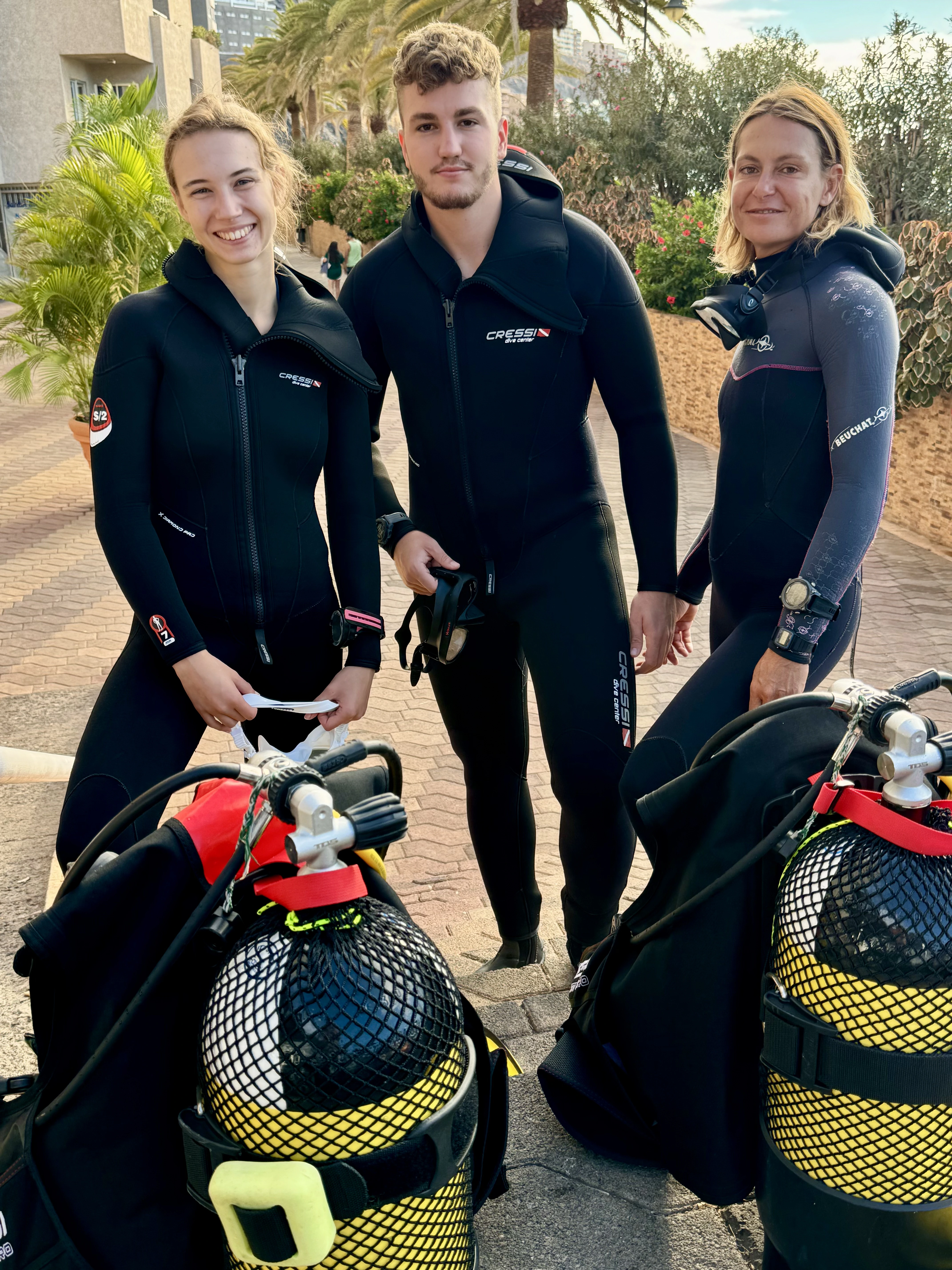
Table of Contents
Safety questions
How dangerous is scuba diving, really?
Less than most people think. Research summarised from DAN (Divers Alert Network) and the British Sub Aqua Club puts the fatality rate for student divers at about 0.48 per 100,000 dives. Per diver per year, the risk is often compared to jogging or driving a car. The key point is that around 85 to 90% of fatal accidents involve human error, which is exactly what training, small groups and a careful instructor reduce.
What are the real causes of diving accidents?
The most common triggers are running out of air, getting trapped or entangled, and equipment problems. Contributing factors include poor buoyancy control, diving alone, panic and heart conditions, especially in divers over 40. Beginners diving shallow, calm sites with an instructor at arm’s length avoid almost all of these situations.
What if I run out of air?
A standard tank lasts a beginner roughly 40 to 50 minutes at shallow depth, and you check your gauge regularly. Your instructor checks it too. Every diver also carries a spare regulator (the “octopus”), so if you ever get low, you share air with your instructor or buddy and ascend together. We end every dive with air still in the tank.
What if my equipment fails?
Modern regulators are designed so that if they fail, they deliver more air, not less. Our gear is serviced regularly, and before every dive we do a buddy check of the air, the regulator, the jacket and the weights. There is always a backup regulator next to you.

Can I get decompression sickness on a beginner dive?
The risk is very low. Decompression sickness is linked to deep, long dives and fast ascents. Try dives in Tenerife stay around 6 to 12 metres, the Open Water course goes to a maximum of 18 metres, and we always ascend slowly with a safety stop. Your dive computer tracks your limits for you.
Is there a doctor or medical check?
Yes. Before diving you fill in a short medical questionnaire. If you answer yes to certain questions, such as some heart, lung or ear conditions, you need a doctor to sign you off first. Be honest here: it protects you. Every diver also needs valid dive insurance; if you do not have it, we offer DAN Europe cover at the center.
Fears and worries
“What if I panic underwater?”
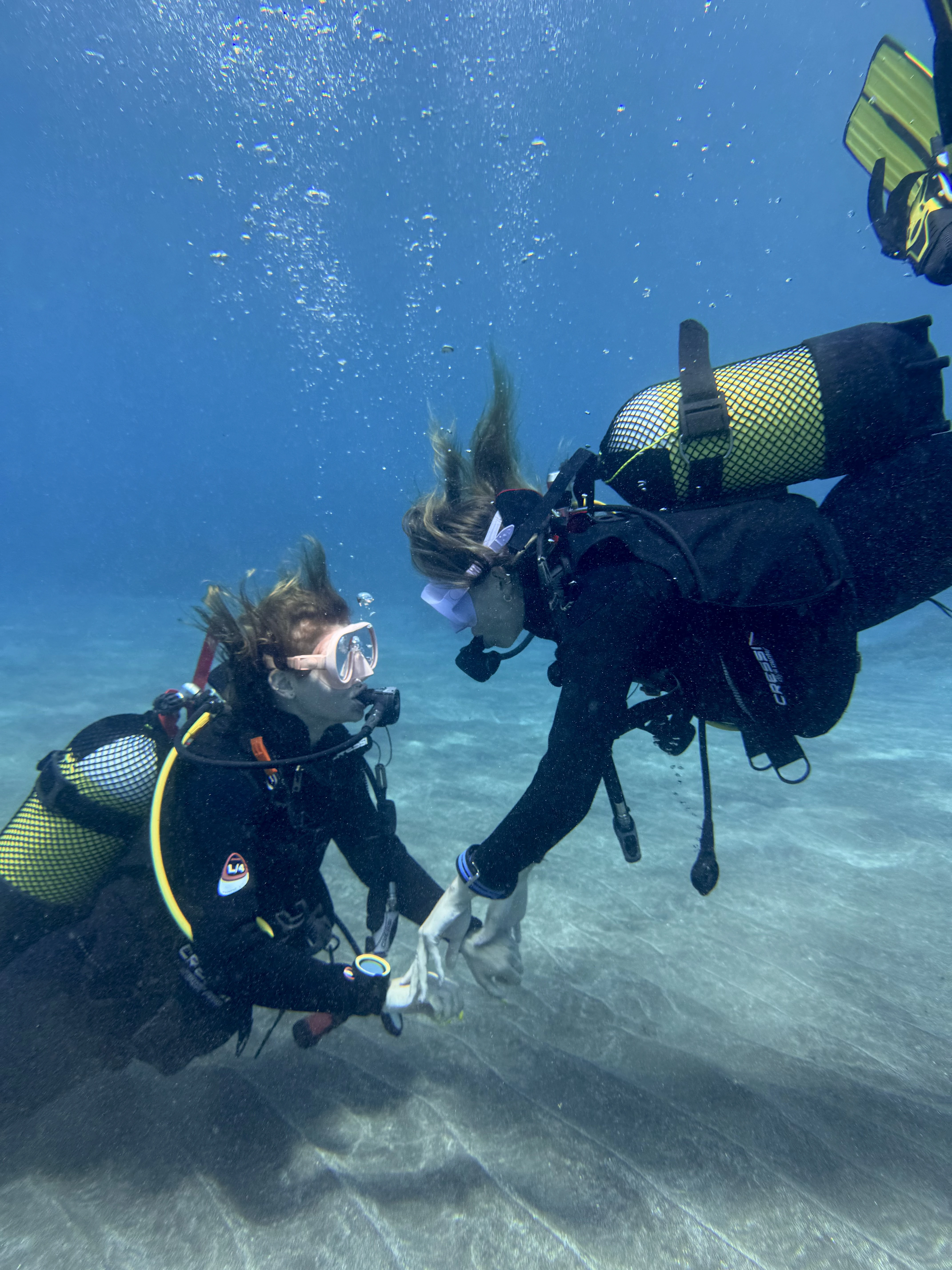
This is the most common worry, and it is normal. Panic usually comes from feeling rushed or surprised. That is why we teach everything first in shallow, calm water, and why we never move on until you are comfortable. If you feel uneasy underwater, the rule is simple: stop, breathe slowly, and signal your instructor. You are never more than an arm’s length away from us, and we can end the dive calmly at any moment.
“I feel claustrophobic in the mask.”
Many people feel this in the first minutes. It helps to practise breathing through the regulator with your face just under the surface, looking at the bottom, before going anywhere. Most guests are surprised how open the ocean feels once they relax: in Tenerife the visibility is often 15 to 25 metres, so you are not in a small space at all.
“What if my ears hurt?”
Ear pressure is normal and easy to manage. You equalise by gently pinching your nose and blowing, or by swallowing, every metre or so on the way down, before you feel pain. We descend slowly and stop whenever you need. If your ears will not clear, we go up a little and try again. Never dive with a cold or blocked nose.
“Are there sharks or dangerous animals in Tenerife?”
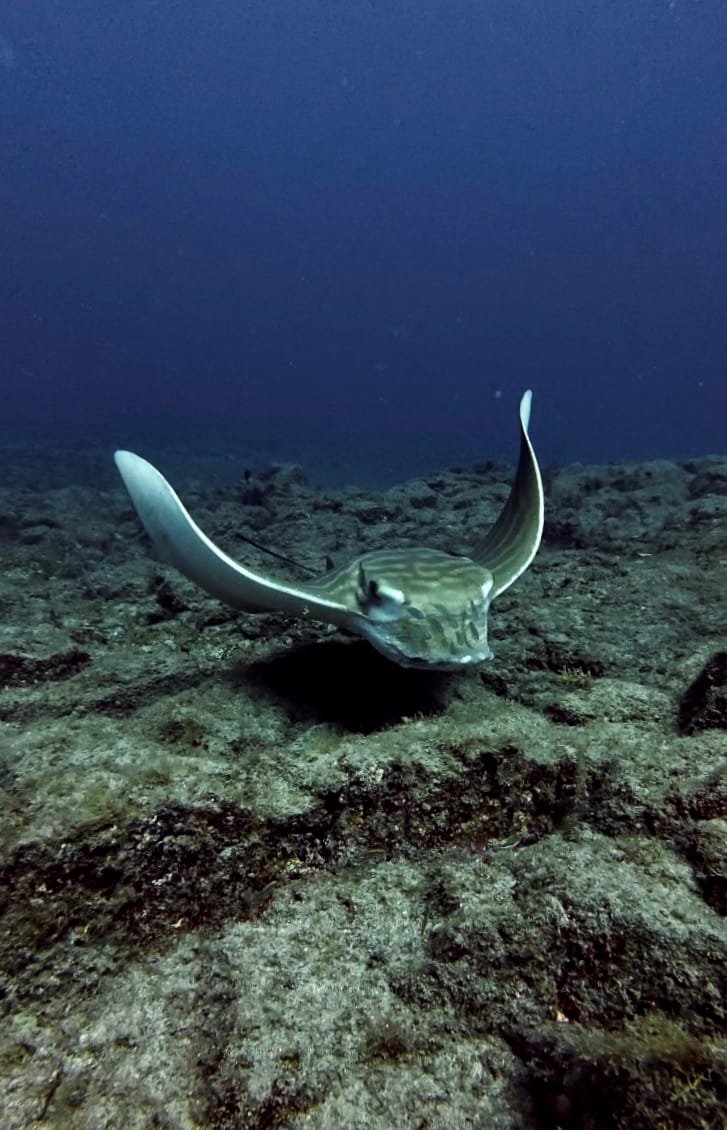
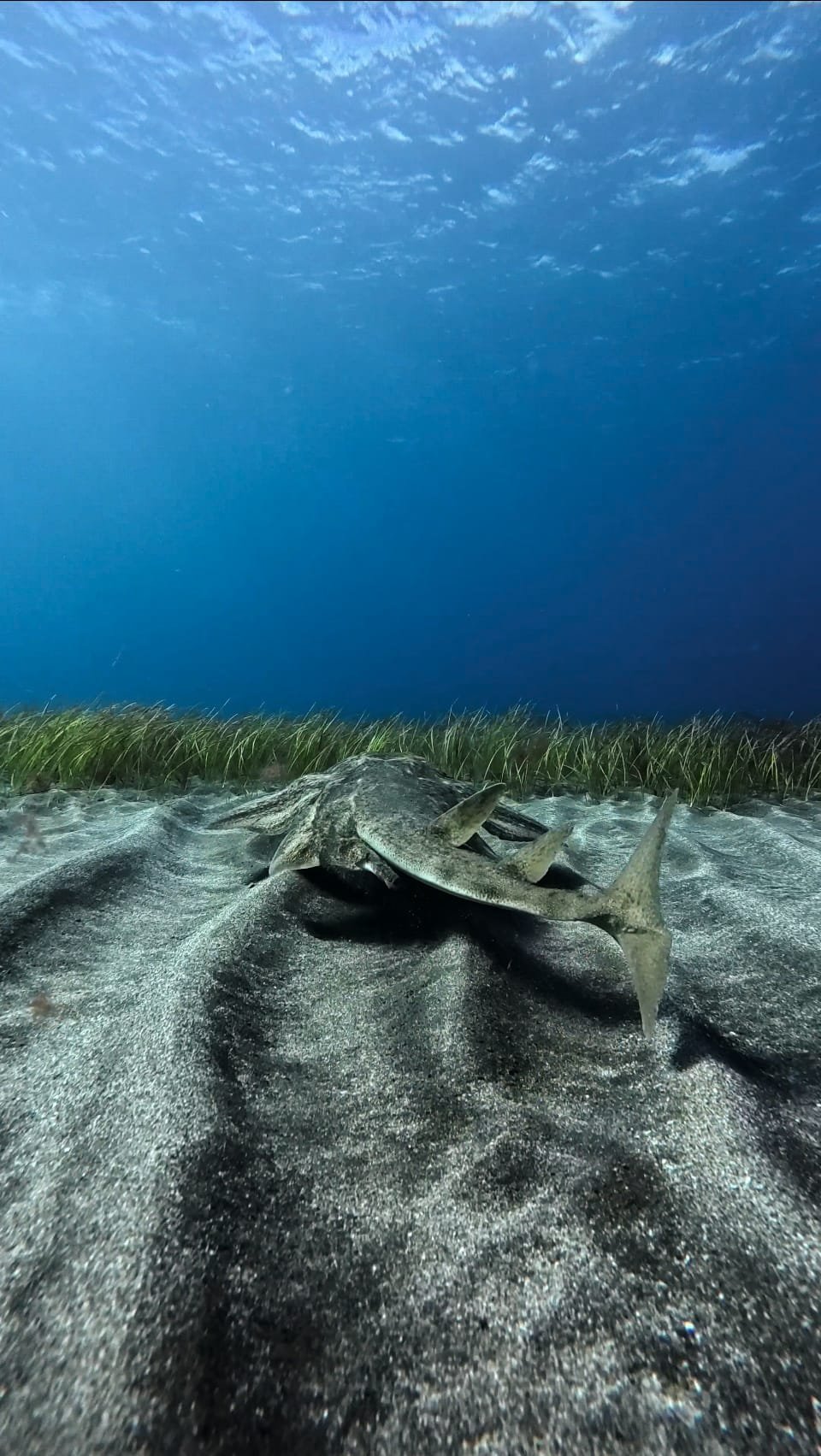
There are no dangerous sharks on our dive sites. The shark you might see is the angelshark, a flat, calm bottom dweller that rests on the sand and is harmless if you do not touch it. The animals to respect are smaller: sea urchins, fireworms and stingrays, which only cause problems if you touch them or put a hand on the bottom. We teach you to keep your hands to yourself, which also protects the reef.
“I am not a strong swimmer. Can I still dive?”
For a Try Scuba Diving experience you do not need to be a strong swimmer, but you should be comfortable in water. For the SSI Open Water Diver course SSI requires a basic water skills test: a 200 metre swim (or 300 metres with mask, fins and snorkel) and 10 minutes floating. There is no time limit and any stroke is fine.
“What if I get lost or separated?”
In our groups that is very unlikely: we keep a maximum of 4 divers per guide, and on courses a maximum of 2 students per instructor. You also learn what to do if it ever happens: look around for one minute, then ascend slowly and meet at the surface.
Practical health questions
I wear glasses. Can I dive?
Yes. Soft contact lenses work well under a mask, or you can use a prescription mask. Tell us in advance and we will help you find the best option.
Can I dive with asthma?
Sometimes. Asthma is one of the conditions on the medical questionnaire, so you will need a doctor to assess you and sign the form before diving. Many people with well controlled asthma are cleared to dive.
Can I fly or go up Mount Teide after diving?
Wait before going to altitude. DAN recommends at least 12 hours after a single no decompression dive and at least 18 hours after multiple dives or several days of diving. Teide counts as altitude too: the cable car base is above 2,300 metres, so plan your Teide trip before your dives or leave a full day after.
Is there an age limit?
Children can start the SSI Open Water Diver course from 10 years old, with depth limits for younger divers. There is no upper age limit: what matters is your health and fitness, which the medical questionnaire covers. Divers over 40 should pay extra attention to heart health.
I have not dived in years. Is that a problem?
Not at all, but we recommend a Scuba Refresher if it has been more than a year or so. It is a relaxed session to refresh your skills before your fun dives, and it makes those dives much more enjoyable.
How we keep nervous divers safe at Barbarian Diving
- Small groups: maximum 4 divers per guide, maximum 2 students per instructor on courses
- Calm, shallow sites first: sheltered shore dives in south Tenerife, chosen daily by sea conditions
- No rushing: we move to the next step only when you are ready
- Serviced equipment and a buddy check before every dive
- Instruction in English, German and Spanish, so nothing gets lost in translation
- Dive insurance available on site through DAN Europe

Nervous divers are exactly who we love teaching. Most first timers tell us their nerves are gone within the first few minutes underwater. Start with a Try Scuba Diving dive, or message us on WhatsApp at +34 623 365 474 with any question before you book.
Sources: Divers Alert Network (DAN) annual diving reports; SSI Open Water Diver standards; DAN Europe flying after diving guidelines.