Quick answer: You can dive in Tenerife all year, because the sea around the island never drops below about 19°C. The water is warmest from September to November, peaking at around 24 to 25°C in October. Angelsharks show up most from December to February and from April to July. Which month suits you depends on whether you’re after warm water or a particular animal.
At Barbarian Diving we dive Los Cristianos every week of the year, and the only day we close is 1 January. So when guests ask us when to come, our honest answer is: whenever you can. What changes through the year is the water temperature and which animals turn up. This guide puts our own dive computer readings next to official climate data and published research, month by month.
When is the best time to dive in Tenerife?
The best time to dive in Tenerife is any month of the year. Come between September and November for the warmest water, or in winter and late spring for the best chance of angelsharks.
- Offshore, the surface water around the Canary Islands cools to about 18°C in late winter, when it mixes with deeper water (Troupin et al., 2010).
- The sea reaches its yearly peak in September and October, according to oceanographers at IOCAG, University of Las Palmas de Gran Canaria (Atlántico Hoy).
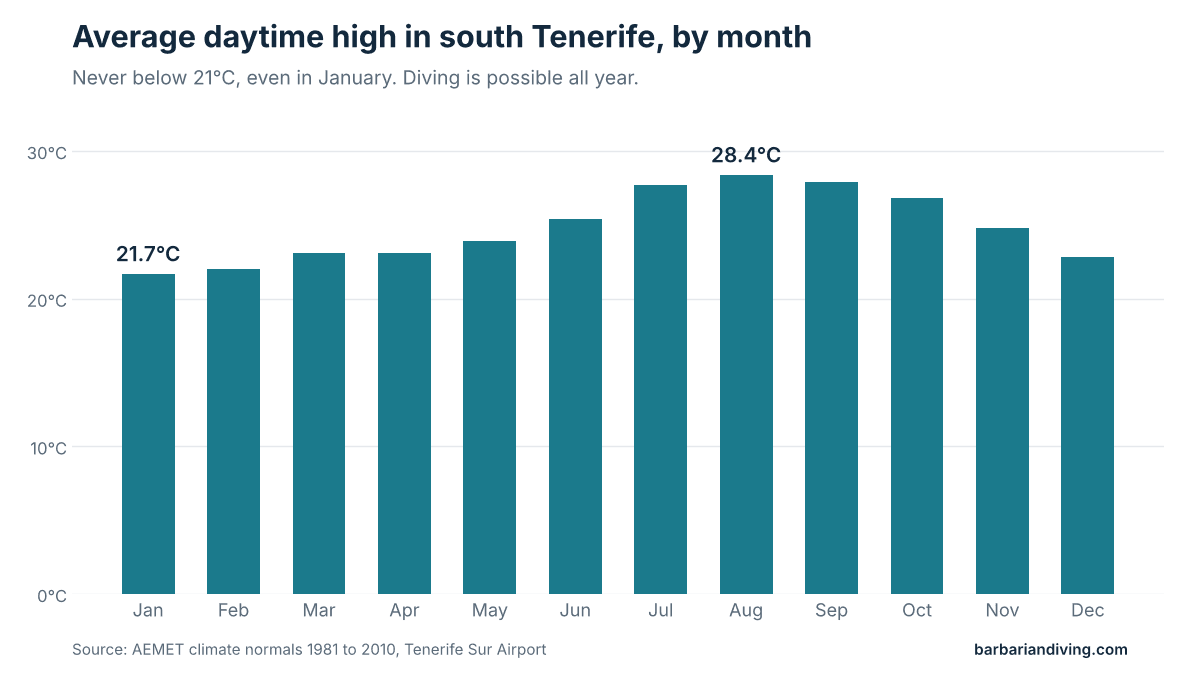
- The average daytime high in south Tenerife goes from 21.7°C in January to 28.4°C in August (AEMET).
Rain is rarely a problem either. South Tenerife gets just 132 mm in an average year (AEMET).
There’s no off season here, so pick your month by what you want to see.
How warm are the water and the air in Tenerife each month?
The sea in Tenerife goes from about 19°C in March to about 25°C in October, and the daytime air stays above 21°C even in January.
The air figures below are AEMET’s official averages for Tenerife Sur Airport, the closest weather station to Los Cristianos. The water figures are what our own dive computers read on the south coast.
| Month | Air, average daytime high | Water, typical | Worth knowing |
|---|---|---|---|
| January | 21.7°C | 20 to 21°C | Winter angelshark season |
| February | 22.0°C | 19 to 20°C | Water cooling toward its yearly low |
| March | 23.1°C | 19°C | Coolest water of the year |
| April | 23.1°C | 20°C | Spring angelshark season begins |
| May | 23.9°C | 20 to 21°C | Almost no rain (1 mm on average) |
| June | 25.4°C | 21°C | Busiest month for angelshark sightings |
| July | 27.7°C | 21 to 22°C | Sunniest month; newborn angelsharks |
| August | 28.4°C | 22 to 23°C | Warmest air of the year |
| September | 27.9°C | 24°C | Female butterfly rays in the shallows |
| October | 26.8°C | 24 to 25°C | Warmest water of the year |
| November | 24.8°C | 24°C | Warm sea while Europe turns cold |
| December | 22.8°C | 22 to 23°C | High season around Christmas; book ahead |
Recent winters have run warmer than the long term average. PLOCAN’s ocean station measured about 20°C in early 2024 and 19.7°C in early 2025, both above normal for that time of year (RTVC).
What will you see underwater in each season?
Turtles, rays and reef fish are possible on any dive in Tenerife, but each season brings something different.
| Season | Water | Highlights | Good to know |
|---|---|---|---|
| Winter (December to February) | 19 to 23°C | Angelsharks during their mating season | A late winter plankton bloom can make some days less clear |
| Spring (March to May) | 19 to 21°C | Spring angelshark season starts in April | Water warms steadily from April |
| Summer (June to August) | 21 to 23°C | Peak angelshark sightings, newborn angelsharks | Longest, sunniest days |
| Autumn (September to November) | 24 to 25°C | Warmest water, female spiny butterfly rays | Fewest angelshark sightings in September |
That late winter bloom has a simple cause. As the surface cools, it mixes with deeper water and brings up nutrients for plankton to feed on (Troupin et al., 2010).
None of this is guaranteed. These are wild animals. Our guides take you where your chances are best, and we never chase or touch them.
When is the best time to see angelsharks in Tenerife?
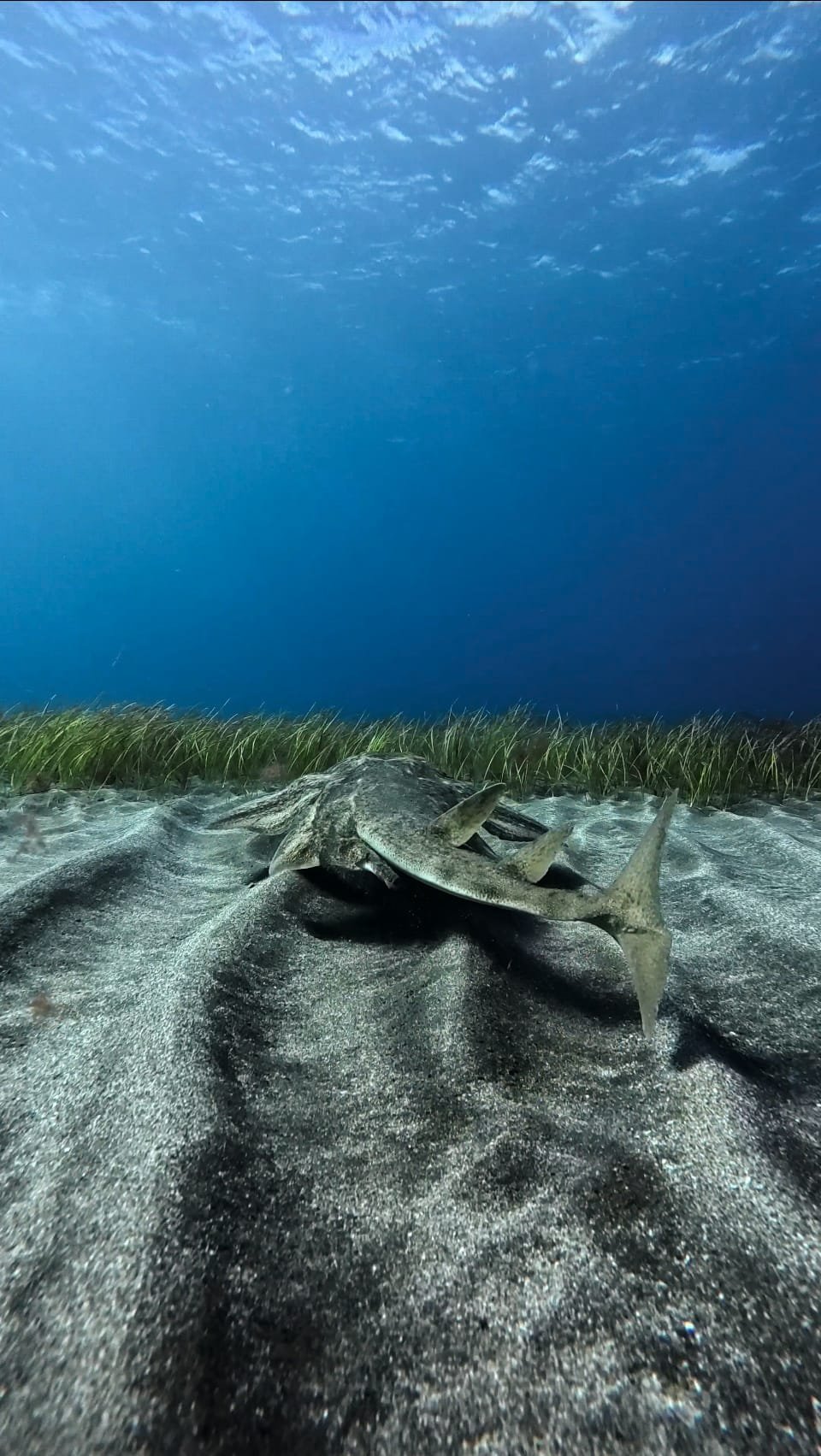
The best time to see angelsharks in Tenerife is December to February and April to July.
- A study of 678 diver sightings across the Canary Islands found two peaks once diving effort was taken into account: April to July, and December to February (Meyers et al., 2017).
- June alone produced 25% of all encounters. September produced just 2% (Meyers et al., 2017).
- Tenerife recorded more newborn angelsharks than any other island, 36 of the 69 reported, and 70 of 76 newborns across the islands were seen between April and July (Meyers et al., 2017).
Most of those encounters happened at 10 to 15 metres, well inside the 18 metre limit of an Open Water diver. You don’t need an advanced card to go looking. Our angelshark diving guide covers how to spot one, and how to behave when you do.
When do rays gather in Los Cristianos?
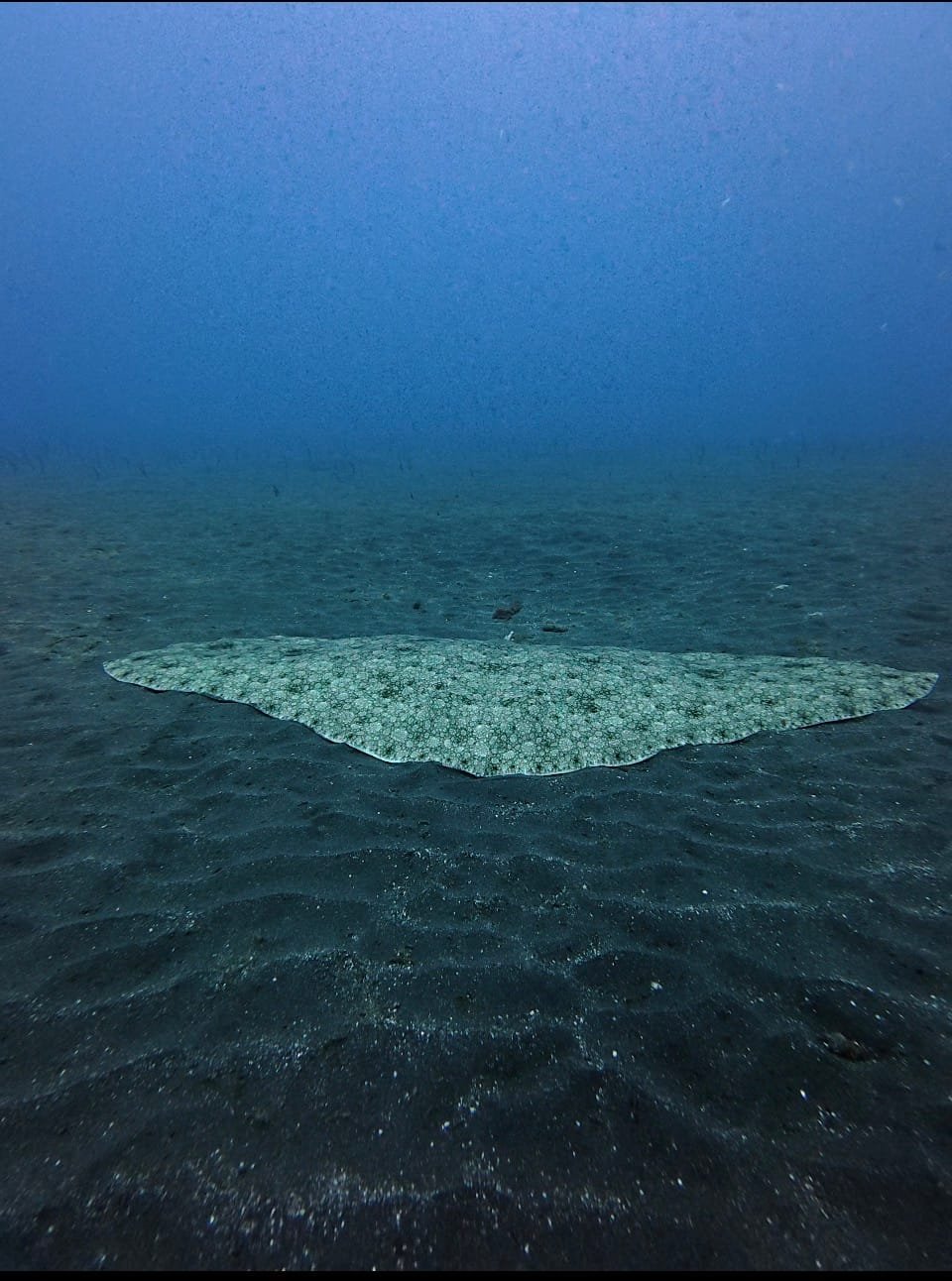
Rays can be seen in Los Cristianos all year, and female spiny butterfly rays are most likely in the shallows in summer and early autumn.
- Los Cristianos Bay is an Important Shark and Ray Area covering 3.54 km², from the shore down to 40 metres (IUCN SSC Shark Specialist Group, 2025).
- Female spiny butterfly rays use the shallow parts of the bay in summer and early autumn, when the sea is 19 to 24°C. In September surveys from 2021 to 2024, more than half of the 67 butterfly rays caught were pregnant females (IUCN SSC Shark Specialist Group, 2025).
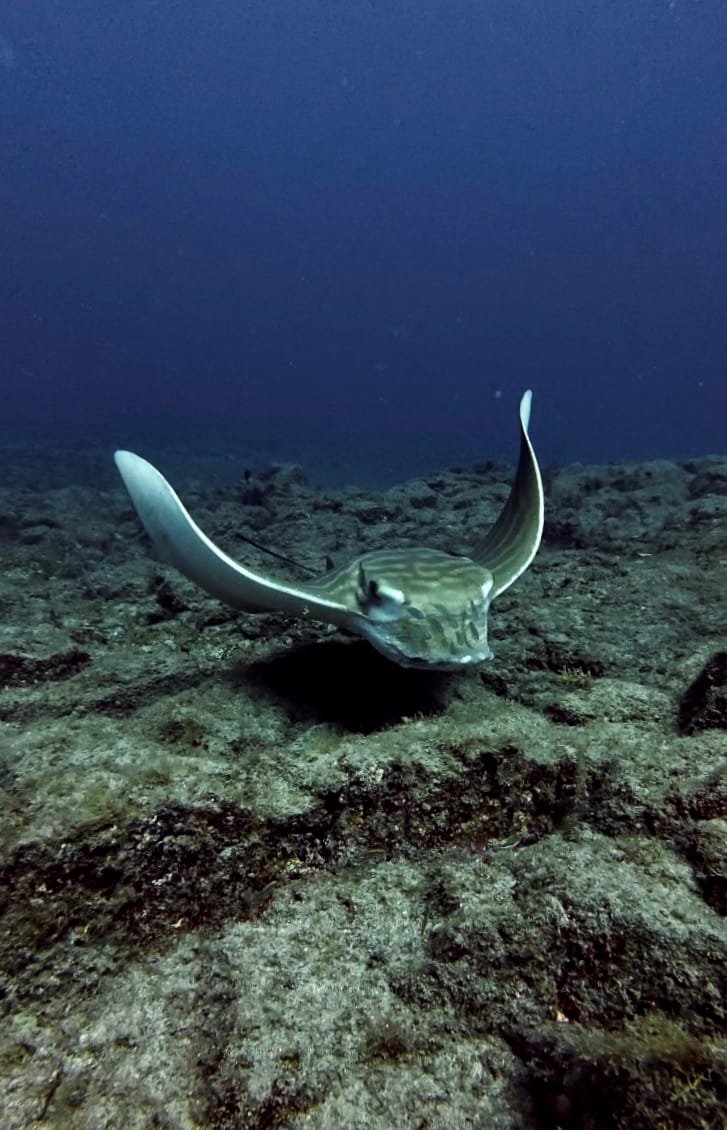
- Groups of more than three critically endangered duckbill eagle rays were seen in every month from 2018 to 2021 (IUCN SSC Shark Specialist Group, 2025).
Our post on the spiny butterfly ray in Tenerife has photos from our own dives and tips for finding one.
Can you see turtles in Tenerife all year?
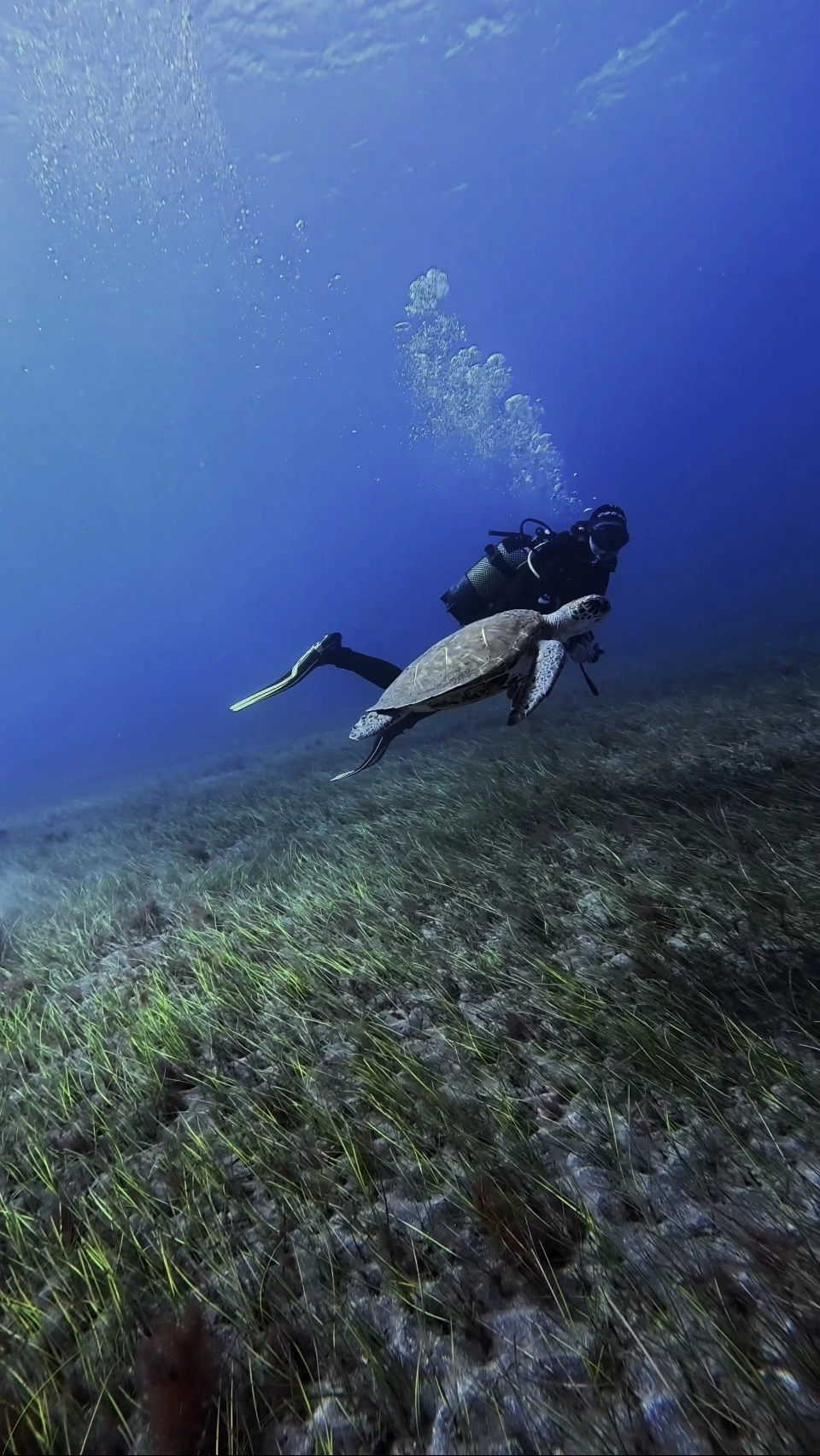
Turtles have no fixed season in Tenerife. Some young green turtles stay in the same bay for years.
Researchers from the University of La Laguna kept recording the same five juvenile green turtles in Abades Bay between 2020 and 2023, feeding mostly on the seagrass (Martín Solà et al., 2024). Abades is one of the shore sites we dive most.
Is winter diving in Tenerife cold, and what wetsuit do you need?
Winter diving in Tenerife is cool, not cold. Between December and March the water sits around 19 to 23°C.
It stays mild above the water too: the coldest nights in February average 15.0°C (AEMET). We give everyone a 7mm wetsuit all year round, and if you feel the cold, ask us for a 1mm rash guard to wear underneath. You won’t need a drysuit.
Which months are best for beginners and diving courses?
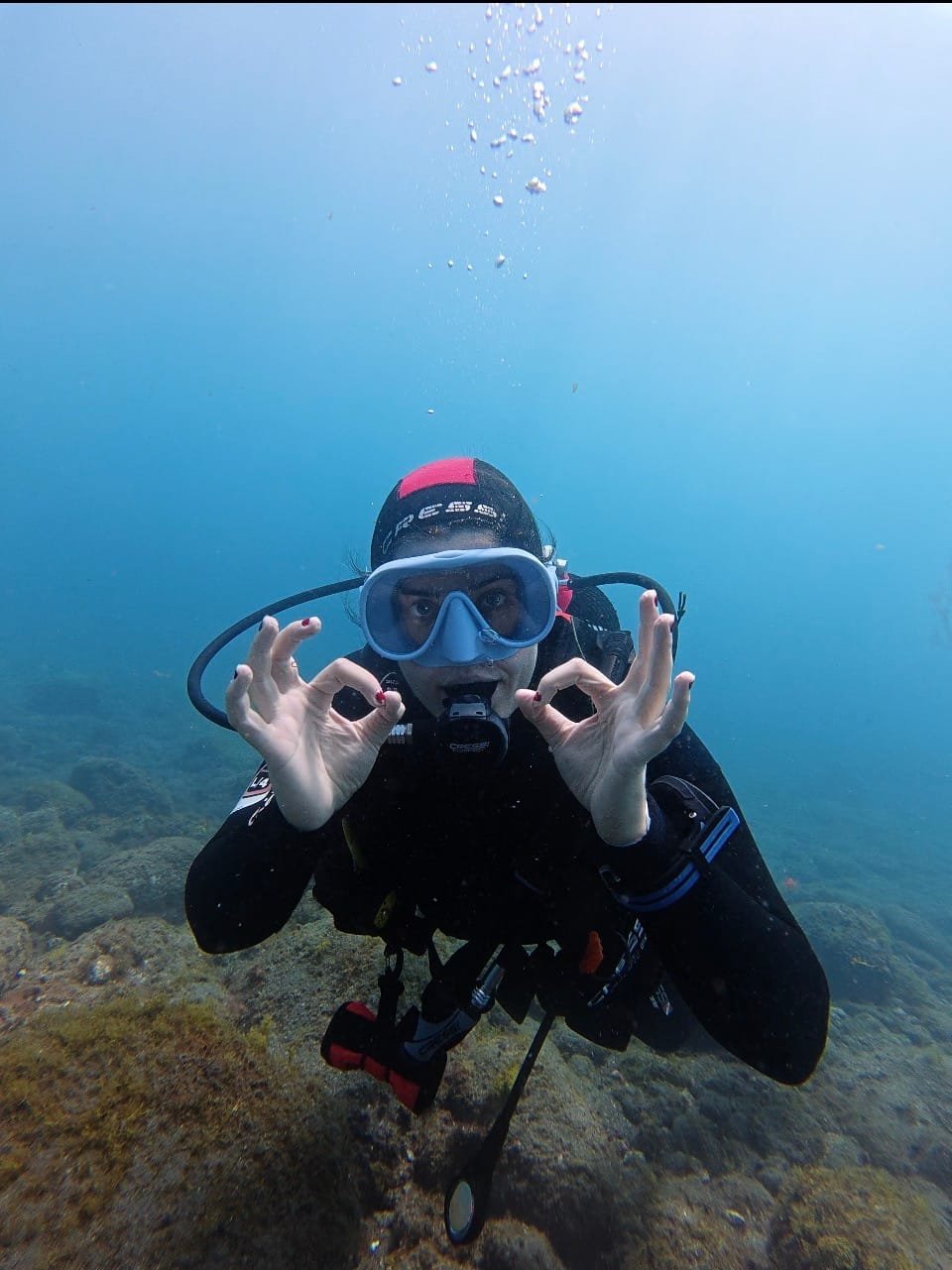
Any month works for a first dive or a course in Tenerife, though the warmer water from June to November is a little more comfortable when you’re new.
Our SSI Open Water Diver course takes three days and can start any day of the year. All the training dives are shore dives on the sheltered south coast, with no more than two students per instructor. Not sure yet? A Try Scuba dive needs no experience at all.
When is Tenerife busiest for diving?
Christmas and New Year are our busiest weeks for diving, and places go fast.
South Tenerife is busy all year anyway. The island had 6,443,553 tourist arrivals in 2025, and 1,634,112 of them stayed in Arona, the municipality Los Cristianos belongs to (Promotur Turismo de Islas Canarias). We take a maximum of four divers per guide, so our spots run out quickly over the holidays. If you’re coming for Christmas, message us a few weeks before you fly.
Which month is best for you?
The best month to dive in Tenerife depends on what kind of diver you are.
| You are | Best months | Why |
|---|---|---|
| Someone who hates cold water | September to November | Warmest sea of the year |
| Hoping to see an angelshark | December to February, April to July | The two peaks of angelshark sightings |
| A ray enthusiast | July to October | Female spiny butterfly rays in the shallows; eagle rays all year |
| Learning to dive | June to November | Warmer water for your first dives |
| Escaping a northern winter | November to March | Daytime highs of about 22 to 25°C while home is cold |
Frequently asked questions
Can you scuba dive in Tenerife in winter?
Yes, you can scuba dive in Tenerife in winter. The water stays around 19 to 23°C, and winter is one of the two best seasons for angelsharks.
What is the coldest month for diving in Tenerife?
March is usually the coldest month for diving in Tenerife, with the sea at about 19°C.
What is the warmest month for diving in Tenerife?
October is usually the warmest month for diving in Tenerife, with the sea at about 24 to 25°C. September and November aren’t far behind at about 24°C.
When can you see angelsharks in Tenerife?
You can see angelsharks in Tenerife all year, but sightings peak from December to February and from April to July. They’re never guaranteed.
Do I need a drysuit to dive in Tenerife?
No, you don’t need a drysuit to dive in Tenerife. A 7mm wetsuit is enough all year, and Barbarian Diving includes one with every dive.
Is Barbarian Diving open at Christmas?
Yes, Barbarian Diving is open over Christmas and New Year and only closes on 1 January. It’s our busiest time, so book early.
How do you book your dives in Tenerife with us?
You book your dives with Barbarian Diving by sending us a WhatsApp message with your dates and certification level, and we take it from there. A guided shore dive costs €55 with all equipment included, and groups never go above four divers per guide. Have a look at our fun dive packages and SSI courses first, or message us straight away on WhatsApp at +34 623 365 474.
Sources: AEMET climate normals 1981 to 2010, Tenerife Sur Airport; Troupin, Sangrà and Arístegui (2010), Journal of Marine Systems; Meyers et al. (2017), Aquatic Conservation; IUCN SSC Shark Specialist Group (2025), Los Cristianos ISRA Factsheet; Martín Solà, Usategui Martín and Badosa Clemente (2024), Scientia Insularum; Promotur Turismo de Islas Canarias (2025); PLOCAN via RTVC (2025). Water temperatures are typical readings from our own dives and vary from year to year.