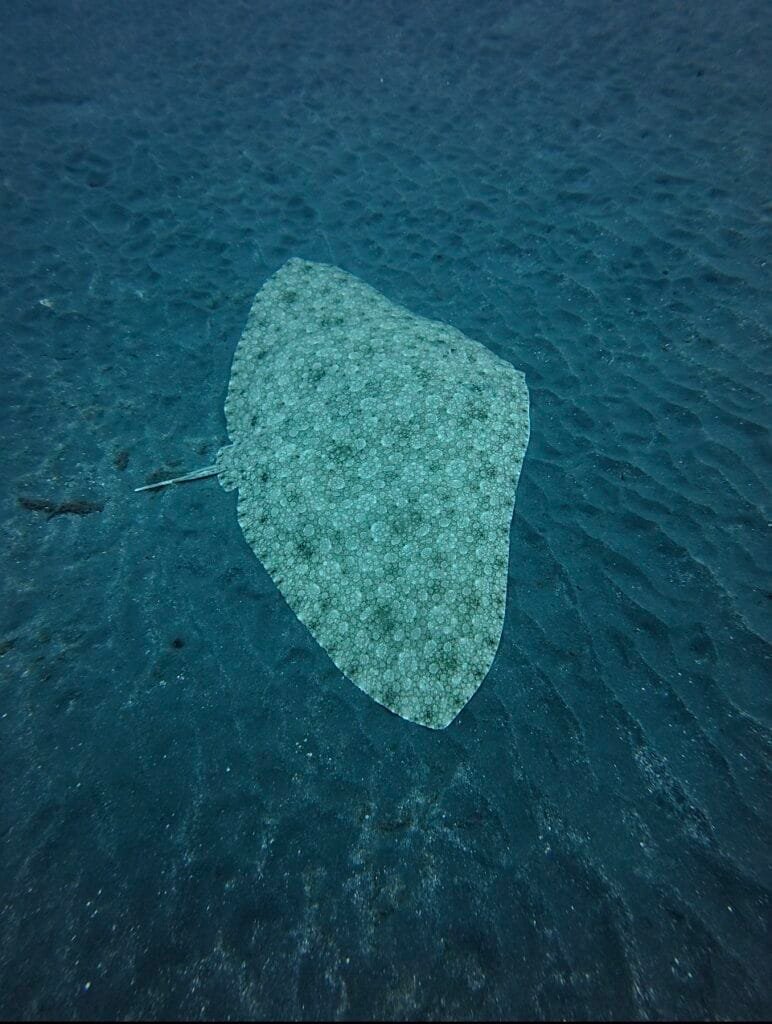
Quick answer: the spiny butterfly ray (Gymnura altavela) is an endangered ray with wide, wing shaped fins that lives on sandy bottoms in south Tenerife. Los Cristianos Bay is officially recognised as an Important Shark and Ray Area (ISRA) because it is a reproductive area for this species: researchers recorded 67 spiny butterfly rays there between 2021 and 2024, and more than half were pregnant females.
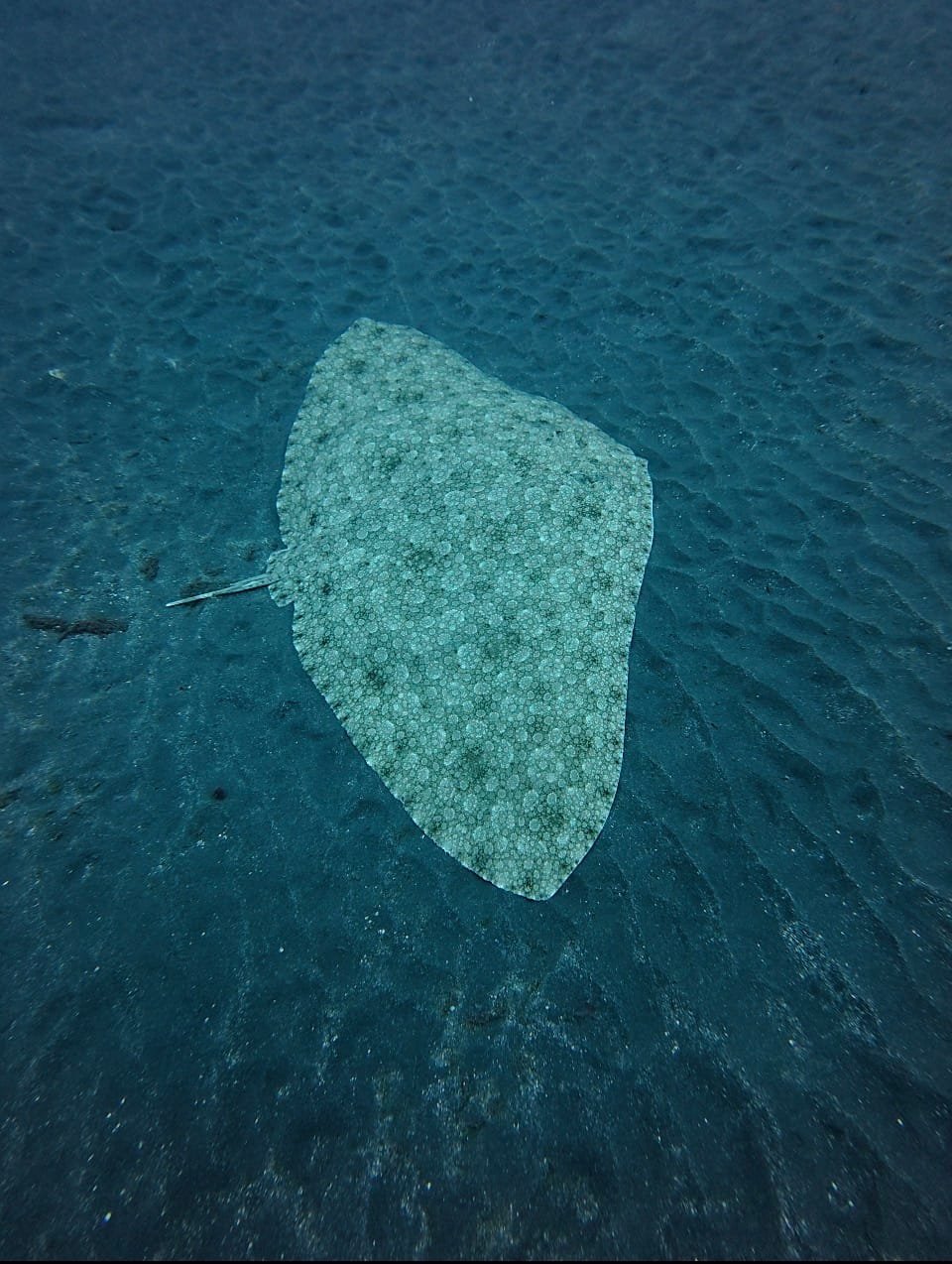
Table of Contents
What is a spiny butterfly ray?
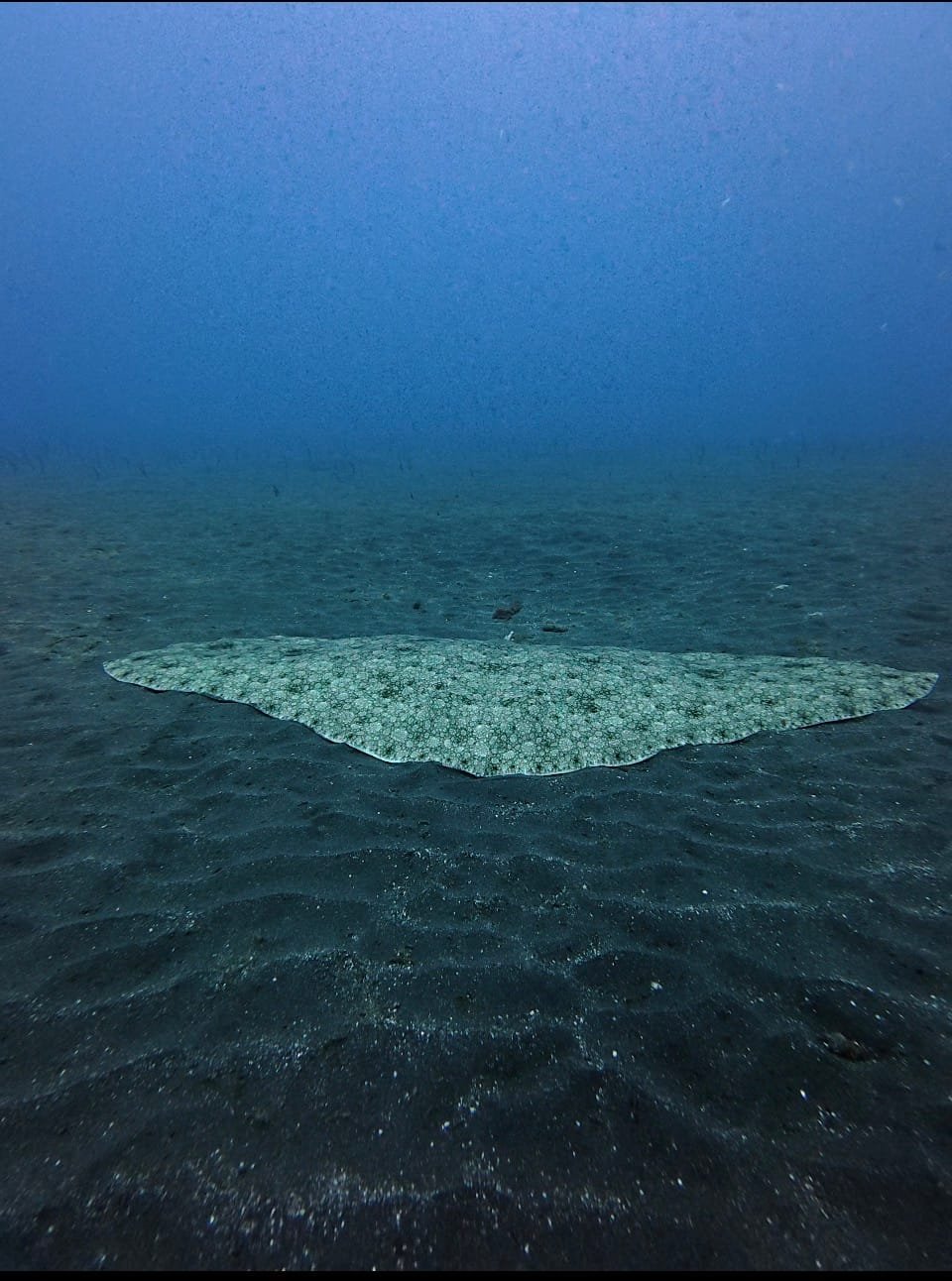
It is one of the widest rays in the Atlantic compared with its length. Its diamond shaped body looks like a butterfly when it swims. It usually rests buried in the sand with only its eyes showing, and feeds on small fish, crustaceans and molluscs. It is classified as Endangered, and the Canary Islands are one of the few places in Europe where divers can still see it.
Why Los Cristianos is special
The Los Cristianos ISRA covers about 3.5 km², from the shore down to 40 metres. It qualifies thanks to three species:
- Spiny butterfly ray (Endangered): an important reproductive area.
- Duckbill eagle ray (Critically Endangered): the highest number of recorded sightings around Tenerife.
- Common smoothhound shark (Endangered): regular aggregations of juveniles.
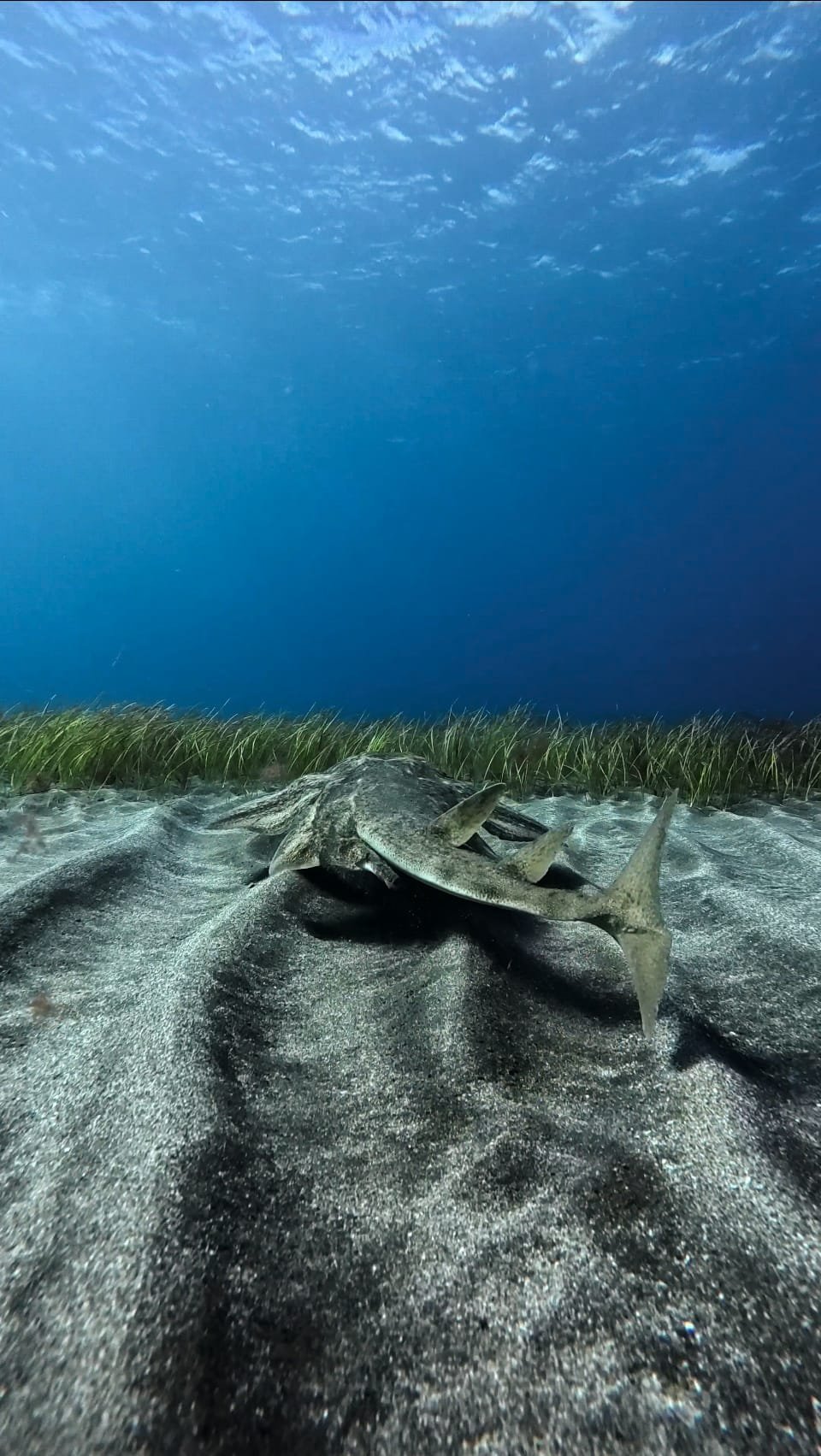
Angelsharks are not one of the qualifying species, but they are regularly seen in the area, sometimes in small groups. Our dive center is on Avenida Juan Carlos I, a short walk from the bay.
Where can you see butterfly rays when diving in Tenerife?
Look over sand and next to seagrass meadows, usually between 5 and 25 metres. Sandy areas on the south coast, including around Los Cristianos and sites like Abades, are the places to look. Sightings are never guaranteed: these are wild animals, and our guides will never chase or touch them. The butterfly rays in this post were photographed on our own dives at Abades, San Juan and Palm Mar Cave.
Tips to spot one
- Scan the sand slowly: look for a wide oval outline and two eyes.
- Stay off the bottom: good buoyancy means you do not stir up the sand. Our Perfect Buoyancy course helps a lot.
- Keep your distance: if it lifts off, let it go. A calm diver gets the longer encounter.
- Dive in a small group: we keep a maximum of 4 divers per guide, which means less noise and more sightings.
Sharks in Tenerife: what can you really see?
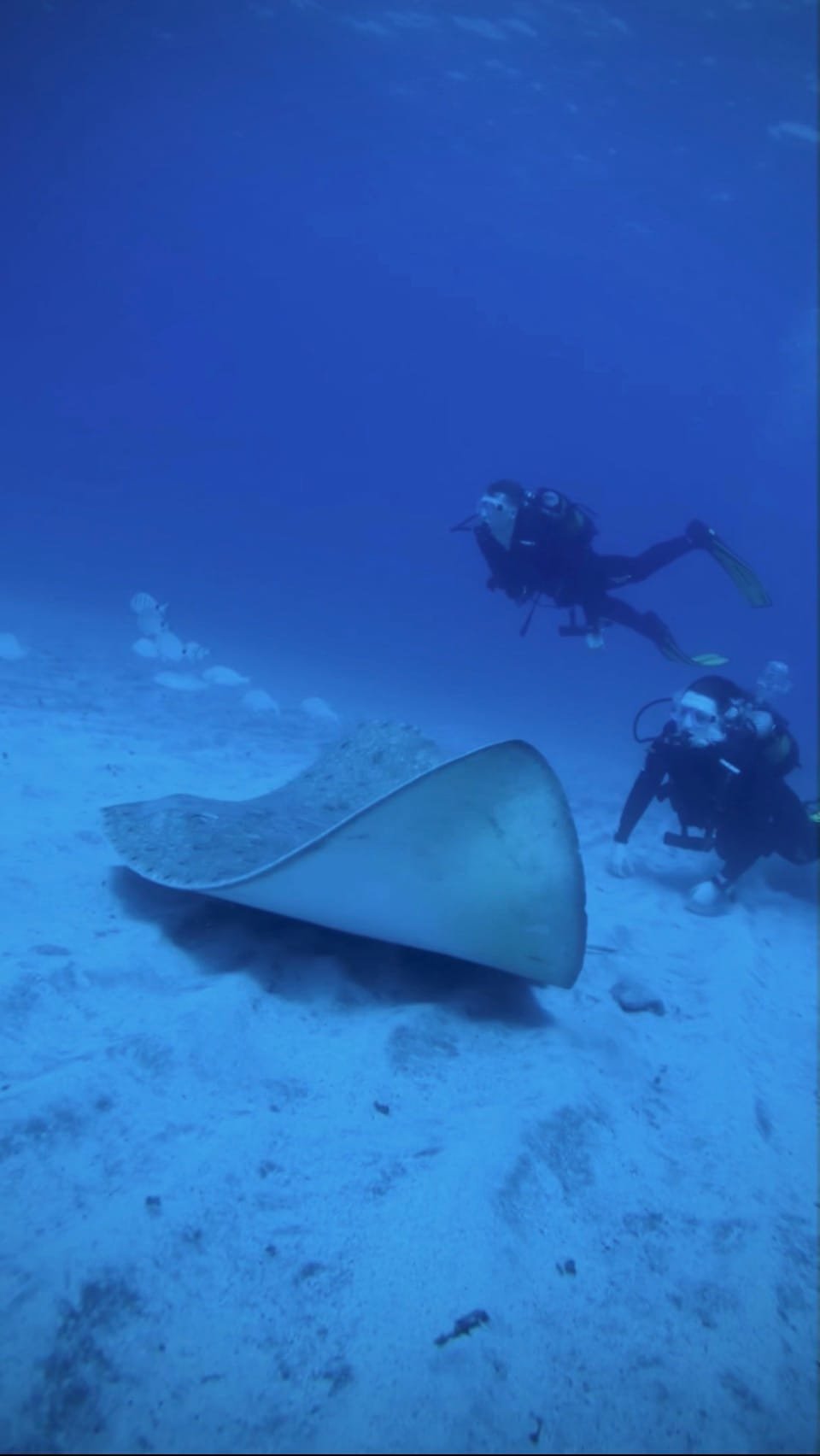
Tenerife is not a destination for big shark encounters. What you can realistically see are angelsharks, smoothhounds and several species of rays. For the full picture, read our angelshark diving guide.
Diving responsibly
Barbarian Diving supports the conservation of sharks and rays in the Canary Islands. If you photograph a butterfly ray or an angelshark, you can share your sighting with the Angel Shark Conservation Network to help researchers.
Frequently asked questions
Is the butterfly ray dangerous?
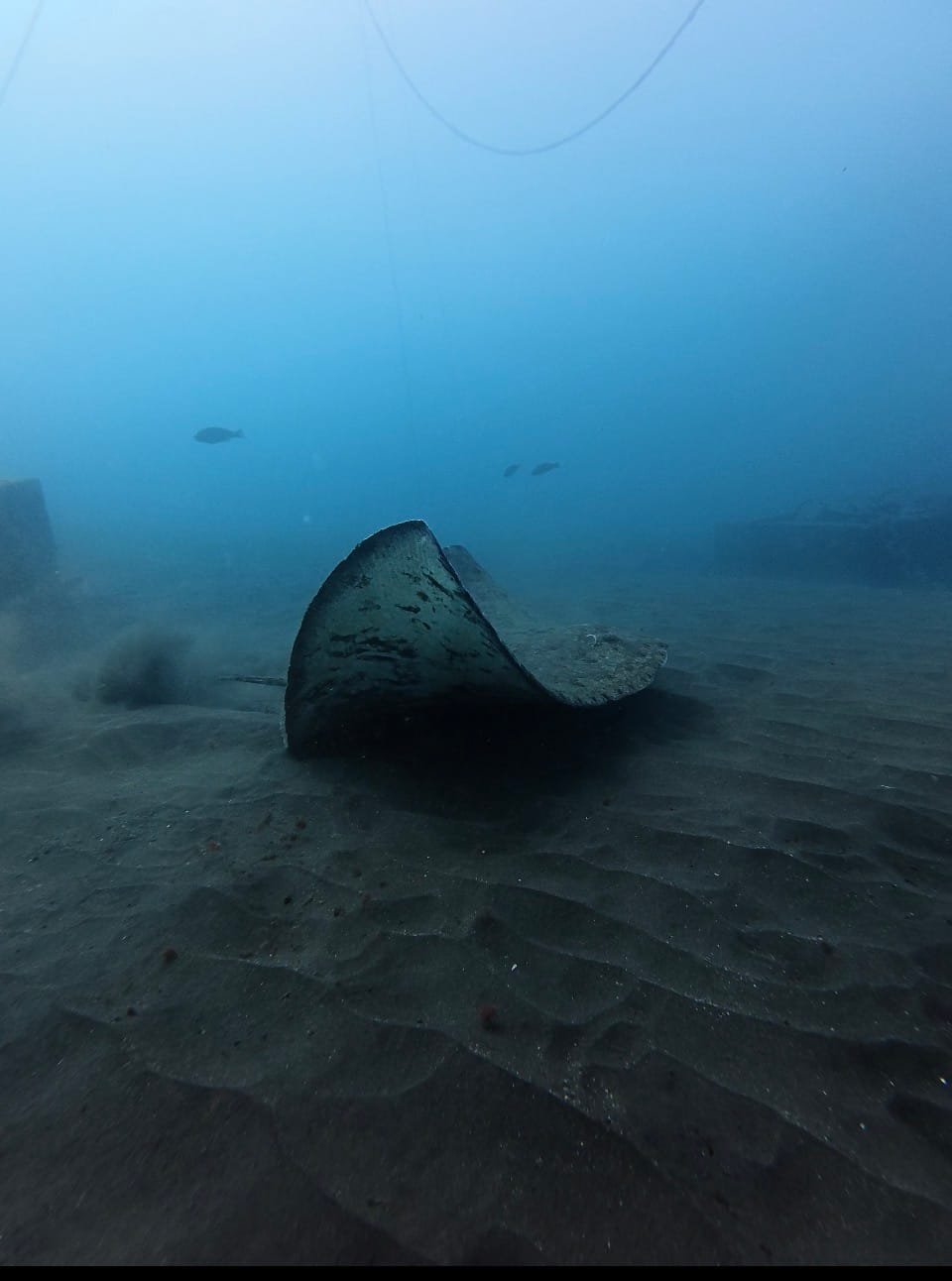
No. It is shy and swims away when disturbed. As with any ray, never touch it or put your hands on the sand near it.
When is the best time to see butterfly rays in Tenerife?
They can be seen all year. Research in Los Cristianos found many pregnant females, which shows the area is used for reproduction.
Can I see butterfly rays on a shore dive?
Yes. They live on shallow sand and seagrass areas, so you do not need a boat.
What is an ISRA?
An Important Shark and Ray Area is a site identified by the IUCN Shark Specialist Group as critical for one or more shark or ray species.
Dive with us
A guided shore dive with all equipment included costs €55. Message us on WhatsApp at +34 623 365 474 to plan your dives.
Source: Los Cristianos ISRA factsheet, IUCN SSC Shark Specialist Group, sharkrayareas.org.